 1
1
 0
0
By Alfred Ajayi
The Anambra State Government and key stakeholders have resolved to strengthen collaboration to increase the enrolment of women of child-bearing age and other vulnerable groups into the Anambra State Health Insurance Agency (ASHIA) scheme, while addressing challenges posed by the mandatory National Identification Number (NIN) requirement.
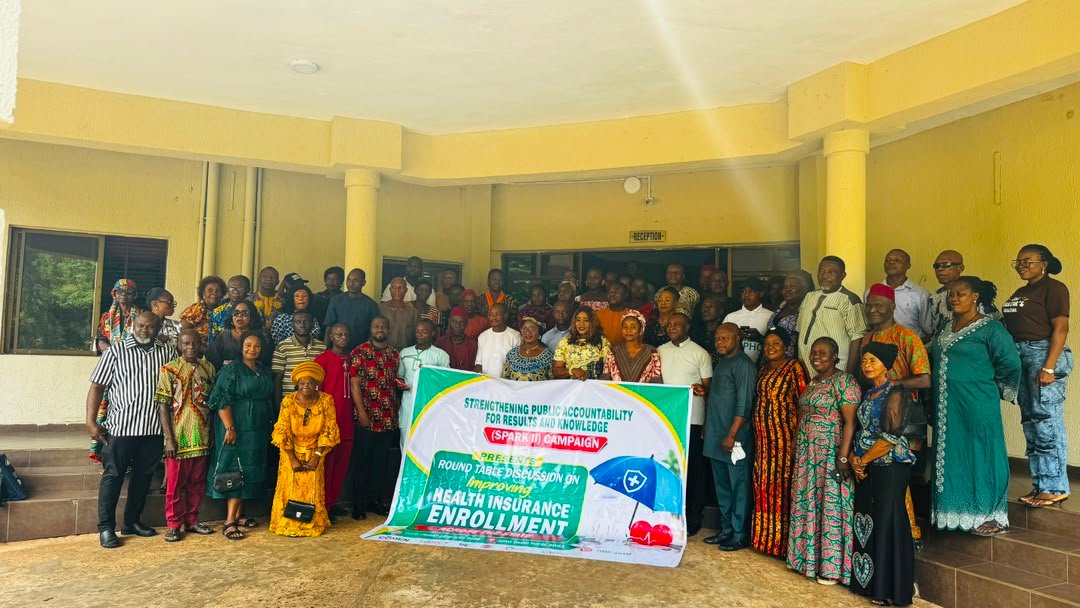
The resolution was reached at a roundtable discussion organised under the Strengthening Public Accountability for Results and Knowledge (SPARK 2) project, supported by the International Budget Partnership (IBP), with participants drawn from government agencies, civil society organisations and community groups.
Representatives of the National Identity Management Commission (NIMC), National Health Insurance Authority (NHIA), National Orientation Agency (NOA), Anambra State Health Insurance Agency (ASHIA), Anambra State Primary Health Care Development Agency (ASPHCDA), Anambra State Town Unions Council (ASTUC), Joint National Association of Persons with Disabilities (JONAPWD), community development groups and traditional institutions brainstormed on improving enrolment into the health insurance scheme.
Participants pledged to leverage the ongoing ward-to-ward enrolment exercise to mobilise women of reproductive age and other vulnerable residents to register for both the NIN and the state health insurance scheme.
Speaking, the Permanent Secretary, Anambra State Ministry of Health, Dr. Obiageli Uchebo, identified the compulsory NIN requirement as a major barrier preventing indigent persons from accessing health insurance under the Basic Health Care Provision Fund (BHCPF).
“For enrolment under the BHCPF through ASHIA, beneficiaries must have a NIN. Unfortunately, many vulnerable people, including children, the elderly and indigent residents, do not have one.
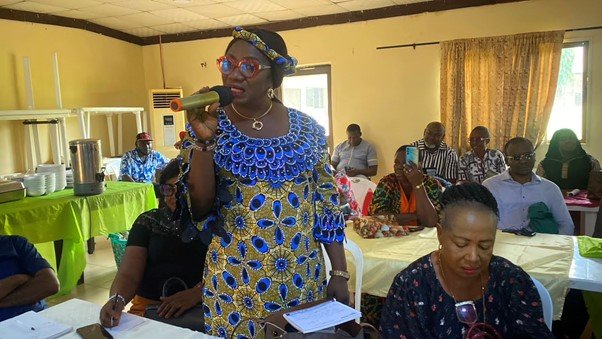
“This discussion is timely because it brings together government agencies and community leaders to find practical solutions. Government is pleased to be part of this initiative,” she said.
In his welcome address, the Director of Justice Development and Peace Caritas (JDPC), Nnewi, Rev. Fr. Benedict Okolo, urged participants to freely identify challenges and recommend practical solutions that would improve maternal and child healthcare through wider health insurance coverage.
Executive Director of the Civil Rights Council (CRC), Okey Onyeka, described the meeting as an opportunity to jointly address barriers affecting pregnant women and nursing mothers, while the Executive Director of the Social and Integral Development Centre (SIDEC), Ugochi Ehiahuruike, commended the commitment shown by participating agencies and community leaders.
She expressed optimism that stronger collaboration among stakeholders would improve access to health insurance for women of child-bearing age across the state. “It is reassuring that all of you are here. We are taking this route for the first time. NIMC has done enough to help ASHIA for enrolment. We commend the cooperation of NHIA and the efforts of ASHIA.
“ASTUC men and women wings are here with Deputy Mayor of Nnewi South and other supervisory councillors. To all of you we say – let’s work together to achieve improved enrollment of women of reproductive age into health insurance.”
Introducing the SPARK 2 programme, Programme Officer of JDPC Nnewi, Onyekachi Ololo, said the initiative is designed to strengthen accountability and improve primary healthcare delivery in six local government areas across Anambra State.
He explained that the project focuses on increasing maternal healthcare access, expanding health insurance enrolment for women and vulnerable groups, strengthening community feedback mechanisms, and promoting accountability in primary healthcare financing.
“Findings from community engagements revealed that the NIN requirement remained one of the biggest barriers to health insurance enrolment, prompting the convening of the roundtable.”
He added that the project is also working with government and community stakeholders to address delays in referrals from traditional birth attendants, build the capacity of Ward Development Committees (WDCs) and health facility managers, and sustain community advocacy through town hall meetings.
The Acting Executive Secretary of ASPHCDA, Dr. Ngozi Okeke, represented on the occasion, urged Ward Development Committee chairmen to intensify sensitisation efforts. “It is unfortunate that we are pleading with people to access free healthcare services. Mobilise your communities, especially women of child-bearing age, to enrol in health insurance because the benefits are enormous,” she said.
Chairman of JONAPWD, Comrade Ugochukwu Okeke, represented by Philip Onwubuya, acknowledged progress in enrolling persons with disabilities but called for improvements in referrals, drug availability and wider coverage for PWDs.
Deputy Mayor of Nnewi South Local Government Area, Mrs. Nneka Ireka, said concerns over access to prescribed drugs under the scheme would be addressed through greater engagement with health facilities.
On his part, ASTUC Vice Chairman, Comrade Chike Ugboma, urged the National Orientation Agency to intensify public enlightenment on NIN enrolment to dispel fears and misconceptions surrounding the identity system.
President of the ASTUC Women Wing, Mrs. Blessing Onuigwe, pledged to mobilise women through the annual August Meeting and other community platforms.
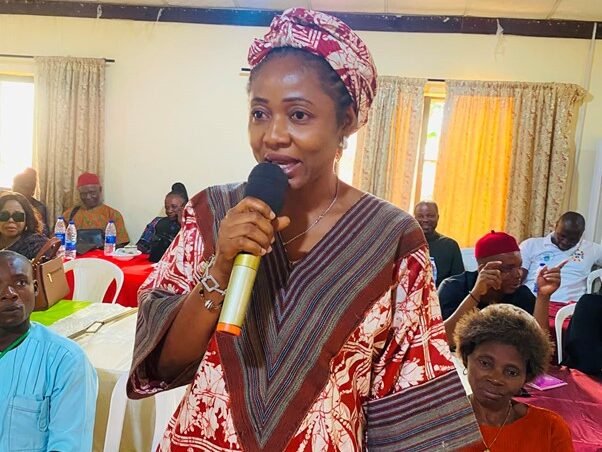
“We will take this message to every community. If possible, ASHIA officials will be invited to conduct enrolment during the August Meeting so more women can benefit,” she said.
The NIMC Local Government Coordinator, Simeon Modebe, who represented the State Coordinator, assured participants that the ongoing ward-to-ward NIN enrolment had been extended until further notice and remains free of charge.
He urged residents to report any cases of extortion, stressing that both adults and children could be enrolled, with children’s biometric capture deferred until adulthood.
Also speaking, the Head of Department, Planning, Research and Statistics, ASHIA, Tochukwu Ibeziako, argued that the mandatory NIN requirement undermines the drive towards Universal Health Coverage (UHC), noting that many vulnerable Nigerians are excluded because of the difficulties associated with obtaining the identity number.
Representing the Community Development Network (COMEN), its Chairman, Ide Godwin Eze, called for stronger support for primary healthcare centres, stressing that quality maternal healthcare remains essential to reducing preventable deaths.
At the end of the meeting, stakeholders agreed to deepen collaboration, strengthen community mobilisation, intensify awareness campaigns and maximise the ongoing enrolment exercise to ensure more women, children and vulnerable residents are enrolled in the state health insurance scheme.
They also promised to encourage wealthy community members to support the indigent to foot the bill of getting their NINs.


