 0
 0
By Sola Rotimi
The Federal Government has been urged to establish a centralised national anthropometric database covering Nigeria’s different ethnic groups to support forensic identification, clinical research and the development of population-specific standards.
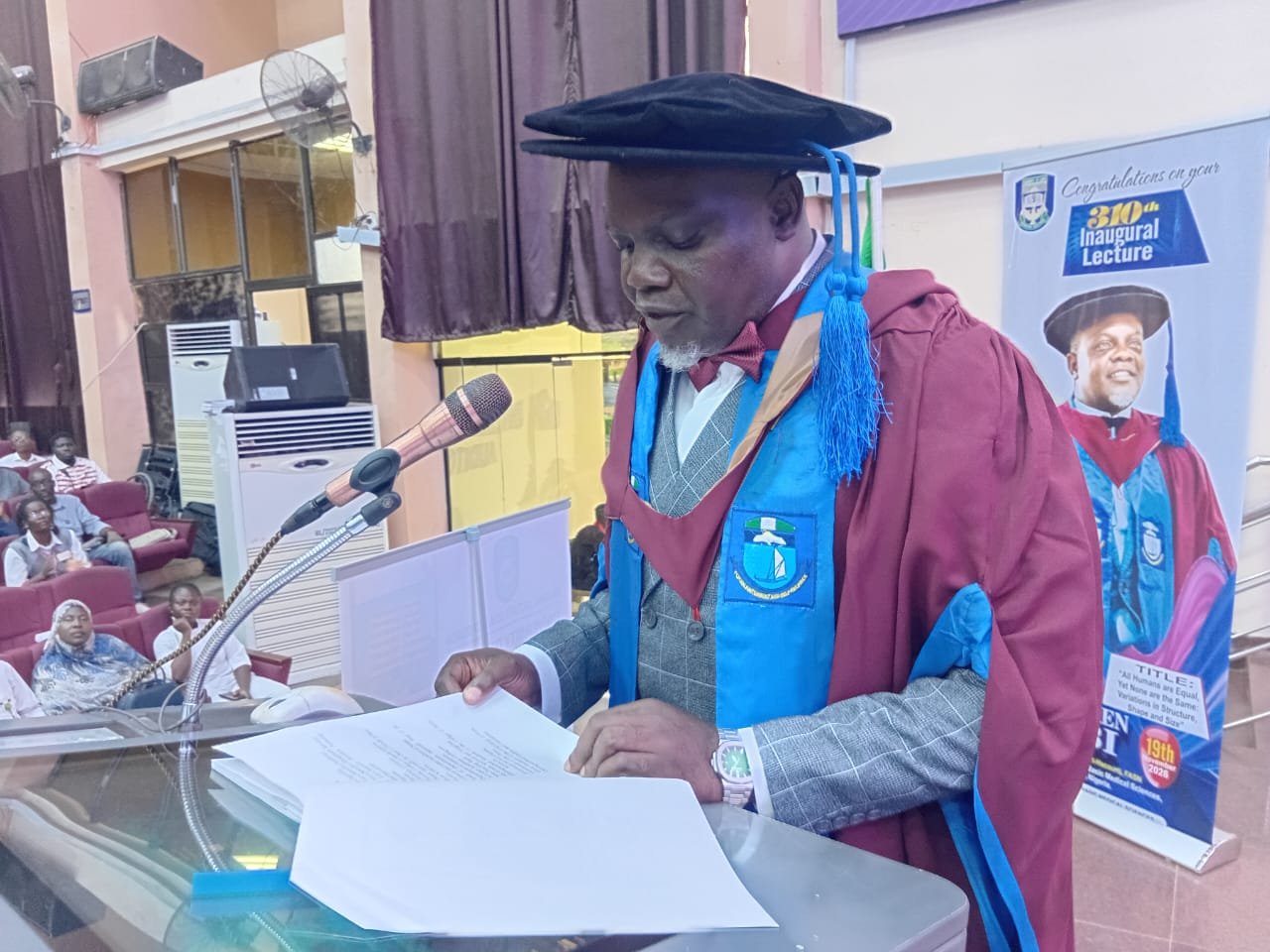
A Professor of Anatomy at the University of Ilorin, Ade Alabi, made the call while delivering the Three Hundred and Tenth Inaugural Lecture of the university, titled “All Humans are Equal, Yet None are the Same: Shape and Size.”
Alabi explained that anthropometry, the scientific study of human body measurements and physical proportions, has wide applications in forensic science, medicine, surgery, sports and public health.
He said the study of human body measurements provides a better understanding of human diversity and could improve medical care, human identification, research and physical performance.
The anatomist also called on the Nigeria Police Force, the National Forensic Science Laboratory and other Law enforcement agencies to use body and bone measurements that reflect the physical characteristics of different Nigerian ethnic groups when identifying unknown human remains.
“The Nigeria Police Force, National Forensic Science Laboratory and other law enforcement agents should adopt population- specific osteometric and morphometric reference data for medico-legal human identification,” he said.
Drawing from his research among ethnic groups across Nigeria, Alabi explained that measurements of bones and other body parts used in forensic investigations should reflect the physical characteristics of the population under investigation.
He said the lecture’s title was not contradictory but reflected the complexity of human existence, noting that although humans share similar biological structures, there are differences in their shapes and sizes.
He identified the skull, breastbone, pelvis, hands, feet and brain as examples of body structures that follow broadly similar biological arrangements across humanity.
The professor of Anatomy also urged the Federal and State Governments to invest in modern scientific equipment for research into human body measurements and skeletal structures.
He identified 3D body scanners, high-resolution dermatoglyphic systems and improved access to radiological equipment, including Computerised Tomography (CT) and Magnetic Resonance Imaging (MRI), as essential tools that should be made available in Nigerian higher institutions.
Alabi further advocated the establishment of a Centre for Human Variation and Forensic Anthropology to systematically document biological characteristics associated with different population groups.
The Professor of Anatomy added that due to the complexity of the human body parts and ageing process, men above the age of forty should seek regular medical screening for prostate and urological conditions.


