
 1
1
 0
0
By Bilkis Abdulraheem Lawal
For couples who want to delay or space pregnancies but are unwilling to use some modern contraceptive methods because of religious beliefs, personal preferences or concerns about side effects, the challenge is not simply finding a contraceptive. It is finding an option they understand, accept and can use correctly.
Nigeria’s 2024 Demographic and Health Survey shows that 41 per cent of currently married women have a demand for family planning, while 21 per cent have an unmet need. 15 per cent use modern methods, compared with 5 per cent who use traditional methods. The survey also found that only 37 per cent of married women’s demand for family planning is satisfied by modern methods.
The issue matters in a country with a heavy maternal-health burden.
The WHO estimated Nigeria’s maternal mortality ratio at 1,047 deaths per 100,000 live births. Family planning alone cannot solve maternal mortality, which has multiple causes, but preventing unintended pregnancies and allowing women to space pregnancies are important components of reproductive healthcare.
For couples whose faith or personal circumstances make some contraceptive methods unacceptable, some faith-based organisations and counsellors are responding with structured fertility-awareness counselling and training. Instead of simply telling couples to “count safe days”, the approach teaches them to recognise fertility signs, record them and use the information to make informed decisions about intercourse when pregnancy is not desired.
But how much of this is actually happening in Nigeria, how many couples are being reached, what happens after the training, and what evidence exists that couples can use the methods successfully over time?
When contraception is not an acceptable option
Joy Romanus, 33, a mother of three, said concerns about possible side effects influenced her decision not to use modern contraception.
She and her husband have relied on the withdrawal method since the beginning of their marriage.
Their first child is seven, the second is four and their youngest is less than a year old.
“I do not want to experience side effects,” she said.

Romanus’ experience illustrates an important distinction in this story. Withdrawal is not the same as a structured fertility-awareness method. Withdrawal involves the man withdrawing before ejaculation, while fertility-awareness approaches require couples to learn and monitor fertility indicators and use that information to decide when to avoid intercourse if they want to prevent pregnancy.
That distinction is important because couples who reject modern contraception may be relying on traditional methods without necessarily having access to formal fertility-awareness counselling.
A 2024 Nigerian DHS found that 5 per cent of currently married women were using traditional family-planning methods.
The question, therefore, is not whether natural methods should replace modern contraception. It is whether structured, evidence-based counselling can give couples who are unwilling to use modern methods a more informed choice while being honest about the limitations.
A response emerging within faith communities
Kudirat Akeju, a Service Delivery Consultant, said family planning should be based on voluntary and informed choice rather than pressure to accept a particular method.
For couples interested in fertility-awareness approaches, she said counselling should help them understand their fertility pattern, the requirements of the method they choose and its realistic effectiveness.
“It is their choice,” she said. “You don’t coerce them to take any method. You counsel them, you tell them the advantages and disadvantages, and let them make their informed choice.”
Akeju stressed that fertility-awareness methods should not be treated as one single method with one effectiveness rate.
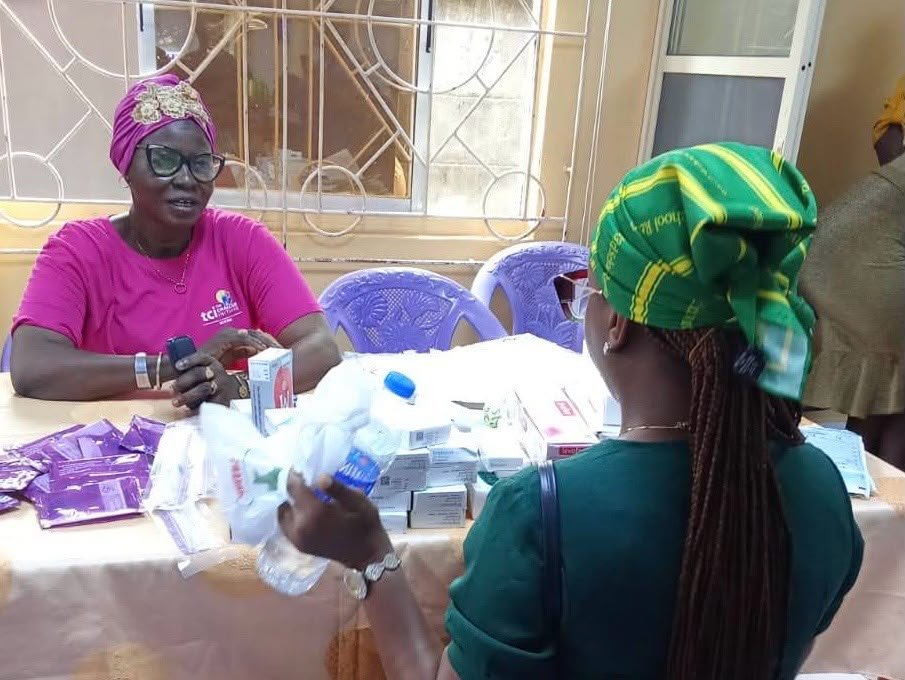
The approach can involve monitoring menstrual cycles, cervical mucus, basal body temperature or a combination of fertility signs, depending on the specific method.
The important issue, she said, is that clients should receive proper instruction rather than simply being told which days are supposedly “safe”.
Abigail Odigie, a Master Trainer with MSI Nigeria Reproductive Choices, similarly described fertility-awareness counselling as a process of helping clients understand their individual fertility patterns.
She said counselling should include realistic information about the advantages, limitations and practical demands of the chosen method.
“If they said that is what they want, after you’ve talked to them, it is their choice,” Odigie said.
The approach is not entirely new to Nigeria. A study by the Nigerian gynaecologists found that Billings Ovulation and Calendar Rhythm methods were among the fertility-awareness methods most commonly provided by the doctors surveyed.
However, 70.9 per cent of those surveyed believed such methods were less effective than conventional contraceptives, with partner cooperation and adherence to the method identified as important concerns.
According to Marie Stopes Timor-Leste estimates that fertility-awareness methods may be around 75 per cent effective with typical use but can reach about 99 per cent when used correctly and according to instructions.
But national evidence on how many Nigerian couples are currently receiving structured fertility-awareness counselling remains limited.
That is where faith-based initiatives provide an important, although still incomplete, picture.
What is happening in Catholic communities?
The Catholic Church’s position on contraception and responsible parenthood is distinct from the personal theological explanations offered by individual representatives.
The Church does not endorse artificial contraception and supports natural family planning within its teaching on responsible parenthood. Catholic fertility-awareness instructors therefore teach couples methods that involve observing fertility and choosing periods of abstinence when pregnancy is to be avoided.
Father Augustine Awodipe, a Catholic priest of the Dominican Order of St Joseph the Worker Province in Nigeria and Ghana, currently serving at St Jude Catholic Church, Mafoluku, Oshodi, Lagos state, said fertility-awareness counselling forms part of the marriage preparation offered to couples.
He also serves as administrator of St Catherine of Siena Medical Centre and said he has taught marriage courses for several years.
According to Awodipe, couples intending to marry normally undergo a marriage course where issues including responsible parenthood and natural family planning are discussed.

He explained the Church’s position as being rooted in its belief that God is the author of life.
Awodipe estimated that he had counselled more than 300 couples, although he acknowledged that he had not kept a formal count.
“The counselling is generally provided as part of marriage preparation and is not charged separately,” he said.
However, his account also reveals an important limitation.
There is no systematic follow-up database tracking how many of the couples continue using fertility-awareness methods, how many discontinue them, or how many experience unintended pregnancies after the counselling.
Usually, he said, couples return for further advice when they encounter difficulties.
This means that although the Church has an established channel for reaching couples, the available information does not yet provide a clear picture of long-term outcomes.
Training couples to read their fertility
In Ilorin, Kwara State, fertility-awareness instruction is also taking place within the Catholic community.
Sijuade Oyewole, founder of Bunmoye Love Affairs and one of the trainers at St Joseph’s Catholic Cathedral Church, Taiwo Isale, said the Catholic faith community she works with teaches the Billings method, which focuses on recognising changes in cervical mucus as an indicator of fertility.
She said both husband and wife need to understand the woman’s fertility signs and work together.
“Both couples need to study their body system and work together as a team to achieve the goal,” she said.
Oyewole said hundreds of people have been trained and counselled, although she did not provide a documented programme record that could independently verify the figure.
Her programme does, however, have a follow-up mechanism.
She said she created a WhatsApp group where people can ask questions after training, while individuals who require additional assistance can receive one-on-one counselling. She also continues to conduct training at the church.
“Women are given assignments to record their daily observations,” she said.
But the method has practical challenges.
Couples who do not live together may find it difficult to observe and discuss fertility signs consistently. Women who do not understand their menstrual cycle may also struggle.
Oyewole said women must learn to distinguish changes in cervical mucus and identify the signs associated with fertility.
She believes seminars and wider awareness are needed to make more people aware of the approach.
Her experience provides evidence that structured fertility-awareness counselling exists within at least some Nigerian faith communities. But the scale and outcome data remain limited.
There is no independently verified figure showing how many couples trained through such programmes are still using the method, or how many became pregnant unintentionally.
The experience of a Catholic couple
Shomo Musebu, a Catholic married man of 9 years who underwent fertility-awareness counselling, said the method has helped him and his wife think deliberately about when to have children.
He said Catholic couples normally undergo marriage counselling before their wedding, lasting several weeks, during which issues around marriage, responsible parenthood and contraception are discussed.
But learning the method does not automatically make it easy to use.

Musebu said for couples living apart the method might be difficult to adhere to because if the husband travels to meet his wife and discovers that she is in her fertile period, he may have to decide whether to postpone intercourse or return at another time.
The experience demonstrates one of the central limitations of fertility-awareness approaches: knowledge is not the same as adherence.
Couples must be able and willing to act on the information they obtain.
Musebu also said his wife has been reluctant to use hormonal or device-based contraceptives because of concerns about possible effects on her health.
Those concerns are the couple’s perceptions, however, and should not be interpreted as evidence that contraceptives cause the particular effects they fear.
When concerns about side effects influence decisions
For Lateef Adeniyi, his wife’s experience with an injectable contraceptive contributed to the couple’s decision to move away from the method.
He said she received an injection expected to prevent pregnancy for three months but did not return for another dose after experiencing changes in her menstrual bleeding.
The couple subsequently relied on withdrawal.
But a menstrual change following an injectable contraceptive should not automatically be interpreted as evidence that the method is harmful.
Memunat Zubair, a retired Chief Health Nursing Officer, and Family Planning Service Provider, said spotting can occur after a woman receives a family-planning injection and does not necessarily have a negative effect.
Where spotting or bleeding continues, she said, a healthcare provider should assess the woman.
Depending on the severity of the bleeding and the woman’s preference, the provider may offer treatment or discuss changing to another contraceptive method.
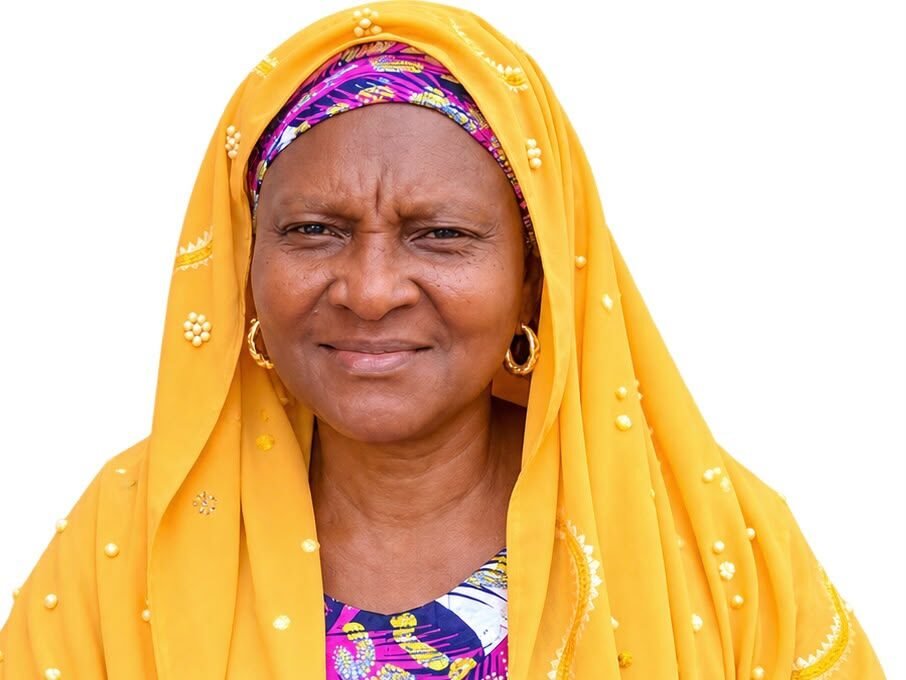
Her explanation adds an important clinical context to Lateef’s experience: a side effect or menstrual change can be real without meaning that the contraceptive is medically unsafe.
It also highlights why accurate counselling is important when couples make decisions about contraception.
Faith, child spacing and the Muslim community
Religious considerations also shape family-planning decisions among some Muslim couples.
Hafsat Idris, a mother of six in her 40s, said she and her husband combine withdrawal with calculating her fertile and infertile days because of their understanding of Islam.
Her youngest child is four, and she said she does not want more children.
An Islamic cleric, Ustaz Abdulsalam Yusuf, said child spacing itself is not contrary to Islam.
He said Islam places importance on the welfare of mothers and children and referred to the Qur’anic guidance on breastfeeding for two years as part of the broader consideration of child wellbeing.
He also referred to the historical use of withdrawal during the time of the Prophet Muhammad as evidence that pregnancy prevention has existed within the Islamic tradition.
Yusuf said modern contraceptive methods can be permissible where they do not cause negative side effects, including menstrual changes, weight or infertility.
Although Islamic scholars and schools of thought have differed in their interpretations of contraception, its circumstances and the conditions under which it may be used.
Chief Imam of Benin Kingdom and Chairman of the League of Imams, Edo State, Abdulfatah Ikponmwonsa Enabulele, offered a broader perspective.
He said Islam is not against family planning and that child spacing can help parents care properly for their children and protect the wellbeing of mothers.
He recalled situations in which women had experienced repeated pregnancies and argued that religious leaders have a responsibility to help families understand the health and economic implications of closely spaced births.

According to Enabulele, “religious leaders in his network have worked with health organisations and community leaders to take health messages to different communities.”
He said discussions about family planning also take place through women’s platforms and other religious gatherings.
“Islam is not against family planning,” he said, explaining that the focus should be on how couples space their children and care for their families.
He also stressed male involvement.
“It takes two to tango,” he said, arguing that husbands and wives need to understand the implications of pregnancy and child spacing together.
Enabulele said he has encountered men who want their wives to continue having children without adequately considering the health consequences.
For him, religious leaders have a continuing role in educating men about the importance of supporting their wives.
Why male involvement matters
Male participation is particularly relevant to fertility-awareness approaches because the method can require both partners to agree on what to do during the fertile period.
Dr Christiana Ijeghede, a retired Director of Nursing and a Knight of St John International, said this is why both husband and wife should receive training.

“Family planning is not only for women. Both parties must go through the training so that the man will be able to cooperate with the wife,” she said.
A cross-sectional study of 588 married men in 12 communities in Abia State found that 55.1 per cent had an overall level of active involvement in family planning. Joint decision-making and accompanying a spouse to a family-planning clinic were among factors associated with active male involvement.
However, the study examined family planning generally, not fertility-awareness methods specifically. It therefore cannot establish that male involvement improves the effectiveness of fertility-awareness methods.
It nevertheless points to a relevant issue: where a method depends on communication and joint decisions, the willingness of both partners to participate may influence whether the method is followed.
The method has limitations
Awodipe said some women struggle because their menstrual cycles are not regular enough to interpret easily.
He also identified discipline as a challenge.
“Knowing when a woman is fertile is one thing; consistently acting on that knowledge when pregnancy is not desired is another.”
Oyewole similarly identified difficulties in understanding menstrual patterns and recognising cervical mucus.
For Musebu, a man living apart from his wife is another challenge.
These experiences are consistent with Nigerian research which has identified partner cooperation and adherence to method rules as important limitations of fertility-awareness-based contraception.
Research among Catholic communities in south-eastern Nigeria has also reported that some couples may misinterpret fertility signs and experience unintended pregnancies, while noting that research on natural family planning in such communities is limited.
The limitations therefore cannot simply be dismissed as people “not trying hard enough”.
They raise practical questions about the quality of training, suitability of the method for individual couples, continued counselling and the support available when couples encounter difficulties.
What does the Nigerian evidence actually tell us?
Nigeria’s national data establishes a clear need for family planning, but it does not tell us how effective structured fertility-awareness counselling programmes are.
The 2024 NDHS shows that 21 per cent of currently married women have an unmet need for family planning, while 5 per cent use traditional methods. There is also evidence that fertility-awareness methods are recognised within Nigeria’s family-planning landscape. A study of Nigerian gynaecologists found that Billings and calendar-based methods were among the fertility-awareness approaches provided by the doctors surveyed.
But there is a significant evidence gap between availability and outcomes.
In the programmes examined for this story, Oyewole reports that hundreds of people have been trained and counselled, but there is no independently verified programme total. She provides follow-up through a WhatsApp group and one-on-one counselling, but no documented data on continuation or pregnancy outcomes were provided.
Awodipe estimates that he has counselled more than 300 couples, but does not maintain a formal follow-up database. Neither programme could provide a verified unintended-pregnancy rate.
There is therefore insufficient Nigerian evidence to determine how well these programmes perform over time or whether they can be scaled beyond the communities where they currently operate. The available Nigerian research also does not establish that structured fertility-awareness counselling is as effective as highly effective modern contraceptive methods.
This distinction matters. It shows a response can be acceptable to a community without yet having sufficient evidence to demonstrate its effectiveness at scale.
A choice, not a replacement
For couples who reject modern contraception, simply offering a method they are unwilling to use is unlikely to address their family-planning needs. Structured fertility-awareness counselling offers one possible response by bringing information and training into communities where religious beliefs already influence reproductive decisions.
The experiences of Oyewole and Awodipe show that such counselling can be incorporated into marriage preparation, church training and continuing support.
The perspectives of Yusuf and Enabulele also show that conversations about child spacing can take place within Muslim communities.
Health professionals such as Akeju, Odigie and Zubair add another important layer: religious or personal preferences should not prevent couples from receiving accurate medical information. That includes realistic information about the effectiveness and limitations of fertility-awareness methods, as well as accurate counselling about the expected side effects and safety of modern contraceptives.
Nigeria’s family-planning challenge is therefore not simply about choosing between “natural” and “modern” methods. It is about whether couples can access accurate, voluntary and evidence-based counselling that respects their values while helping them understand the effectiveness, benefits, risks and practical demands of the options available to them.
Structured fertility-awareness counselling may widen informed choice for some faith-sensitive couples. But the evidence from Nigeria remains limited, particularly on continuation, unintended pregnancies, cost and scalability. Its usefulness will depend on the quality of the method, the competence of the trainer, realistic counselling about effectiveness, the couple’s ability to follow the method and the willingness of both partners to participate.
That makes structured fertility-awareness counselling a potentially useful addition to Nigeria’s family-planning response, but not yet a proven replacement for modern contraception or a solution that can be applied equally to every couple.


