 0
 0
By Bukola Olajide
The First Lady of Kwara State, Prof. Olufolake AbdulRazaq, has advocated for increased support to strengthen non-custodial sentencing measures in the state to alleviate prison overcrowding and prevent minor offenders from being transformed into hardened criminals.
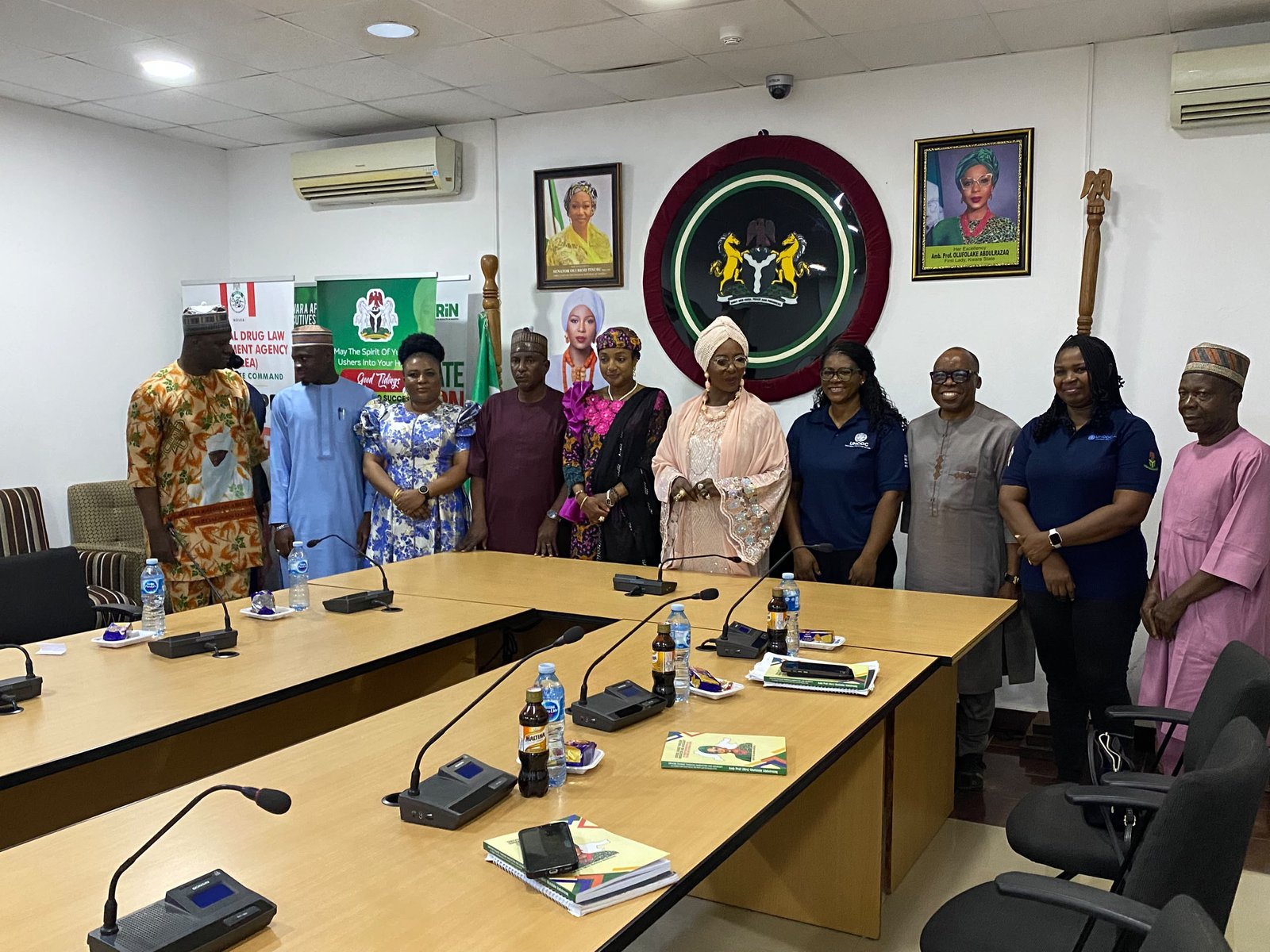
Prof. AbdulRazaq made the call at the Government House in Ilorin while receiving a delegation from the United Nations Office on Drugs and Crime (UNODC) led by Dr. Femi Ajayi.
Emphasising the urgency of criminal justice reform, the First Lady, who also serves as the Chairperson of the Nigeria Governors’ Spouses Forum, pinpointed the risk of mixing low-level offenders with seasoned criminals during incarceration.
“We must address prison overcrowding and prevent minor offenders from being exposed to hardened criminals during incarceration,” Prof. AbdulRazaq stated. “Non-custodial sentencing is a worthwhile approach, but it requires proper implementation, appropriate facilities, and local adaptation.”
Addressing technological options, the the First Lady, who’s also the founder of the Ajike People Support Centre noted that while systems like electronic tagging are deployed in places like the United Kingdom to monitor offenders in the community, Nigeria must develop realistic solutions tailored to its specific socio-economic reality.
“While electronic tagging is used in the United Kingdom to monitor offenders serving sentences outside prison, Nigeria needs to develop practical approaches suited to our own circumstances,” she noted.
To make non-custodial options effective, Prof. AbdulRazaq suggested leveraging existing infrastructure such as community service hubs, skills acquisition facilities, remand homes, and drug rehabilitation centers, as part of a holistic framework for managing offenders.
She specifically pointed out that facilities run by the Police Officers’ Wives Association (POWA) and the National Drug Law Enforcement Agency (NDLEA) could provide vital support for female inmates and individuals suffering from substance abuse disorders.
She further urged international development partners to incentivise performing states.
“Development partners should support states recording progress in their respective sectors. Additional assistance enables us to consolidate achievements while providing a successful model for other states to learn from,” she added.
Earlier, the head of the UNODC delegation, Dr. Femi Ajayi, stated that the team was conducting a strategic study on strengthening non-custodial measures across Nigeria, with Kwara State selected as one of ten focal states. According to Dr. Ajayi, the study aims to identify gaps in execution, document best practices, and pinpoint areas where strategic intervention is needed.
He explained that the UNODC team had already met with key institutional stakeholders, including the Kwara State Ministry of Justice, the Legal Aid Council, the Nigerian Correctional Service (NCoS), and local Civil Society Organizations (CSOs).
Dr. Ajayi identified Kwara’s existing community service centre as a key foundation that can be upgraded for magistrates and judges to assign community service sentences.
Harmony FM reports that the findings of the multi-state study will be presented at an upcoming validation meeting in Abuja before a final report is presented to the First Lady of Nigeria, Senator Oluremi Tinubu.


