 0
0
 0
0
By Muinat Usman
Medical experts have called for stronger political commitment, evidence-based policymaking, and a more efficient patient referral system to address persistent challenges confronting Nigeria’s healthcare sector.
The calls were made at the 2026 Annual General Meeting and Scientific Conference of the Nigeria Medical Association (NMA), Kwara State Branch, held in Ilorin.
The conference, themed “Medicine, Leadership and Public Policy: The Political Influence on Healthcare,” brought together health professionals and key stakeholders to deliberate on strategies for strengthening healthcare delivery in Nigeria.
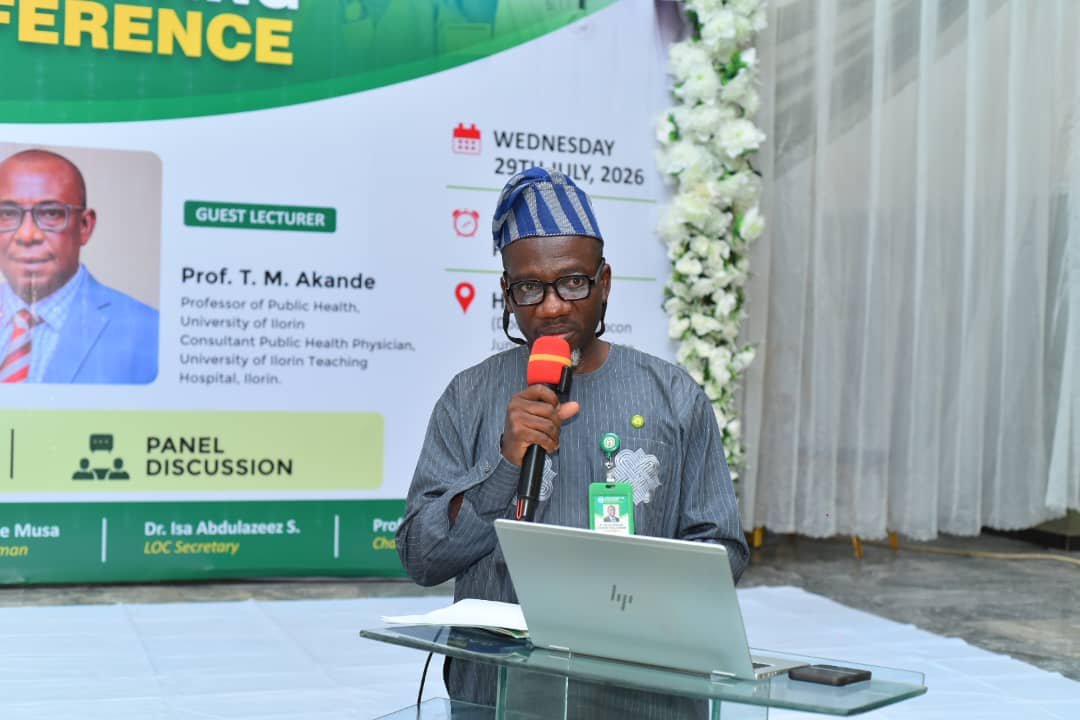
Delivering the keynote address, Public Health Consultant at the University of Ilorin Teaching Hospital (UITH), Professor Tanimola Akande, urged medical professionals to move beyond clinical practice by actively participating in health policy formulation and governance.
According to him, sustainable improvements in healthcare can only be achieved through strong political will and informed public policies.
Professor Akande identified inadequate funding as one of the greatest obstacles to effective healthcare delivery, noting that although substantial funds are often appropriated for the health sector, only about half are eventually released by many state governments.
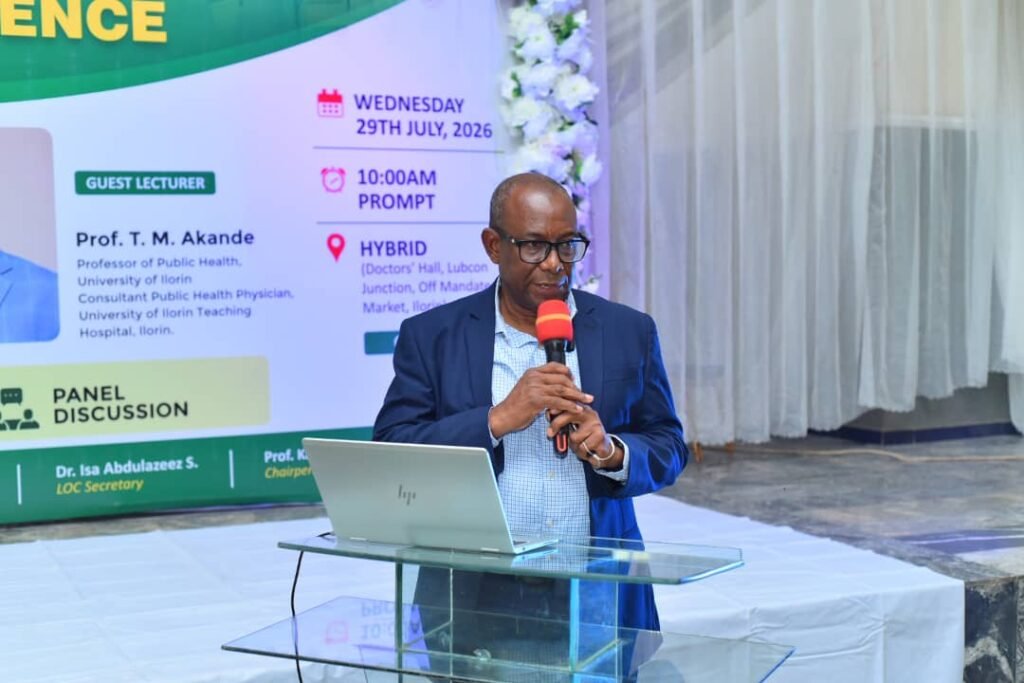
He said the situation weakens the implementation of health programmes and limits access to quality healthcare services.
The Public Health Consultant called on governments at all levels to ensure the timely and consistent release of budgeted healthcare funds while sustaining existing health policies to improve service delivery across the country.
Assessing the Federal Government’s free emergency obstetric care programme for vulnerable women, Professor Akande described the initiative as commendable but said its impact has been constrained by low public awareness.
He also highlighted the difficulty of accurately identifying genuine beneficiaries of social health interventions, warning that some individuals falsely claim financial hardship to access government support.
The public health expert advocated transparent beneficiary identification systems, intensified public enlightenment campaigns, and sustained investment in the health sector to ensure healthcare interventions reach those who need them most.
In his welcome address, the Chairman of the NMA, Kwara State Branch, Professor Abdulrahman Afolabi, described the theme of the conference as timely and highly relevant, stressing that the quality of healthcare in any nation depends not only on the competence of health professionals but also on the quality of leadership, governance, public policy, and political commitment.
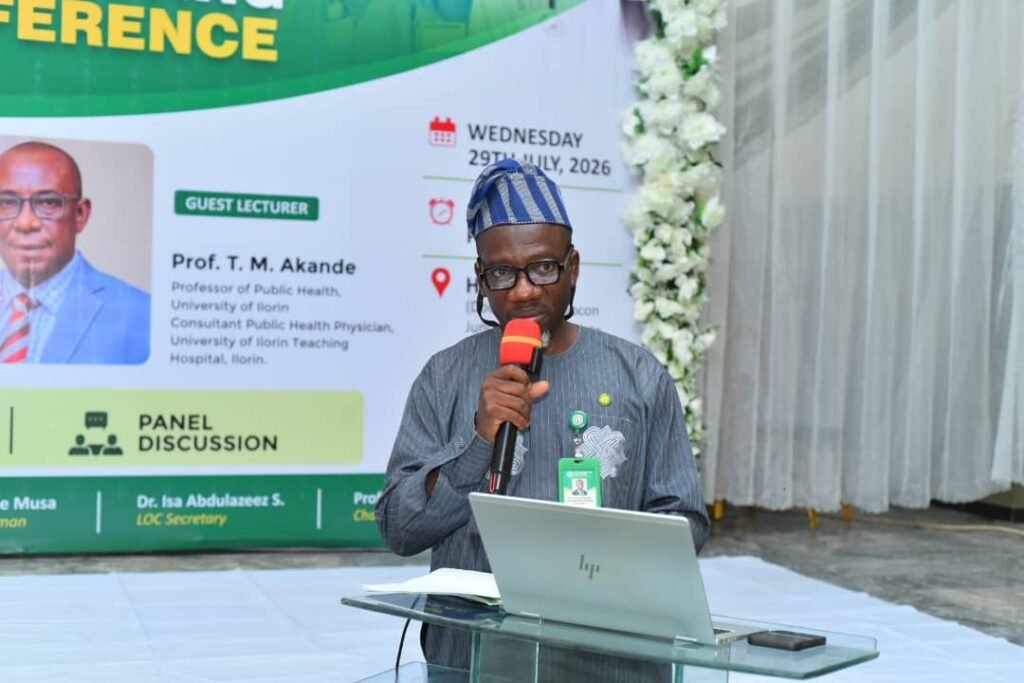
Professor Afolabi maintained that political leadership remains the strongest determinant of an effective and resilient healthcare system.
He noted that the association has consistently advocated placing healthcare at the centre of Nigeria’s development agenda, emphasizing that a healthy population is essential for sustainable economic growth, national security, socially stability, and human development.
The Chairman pointed out that investment in healthcare should be viewed not as expenditure but as a strategic investment in the nation’s greatest asset—its people.
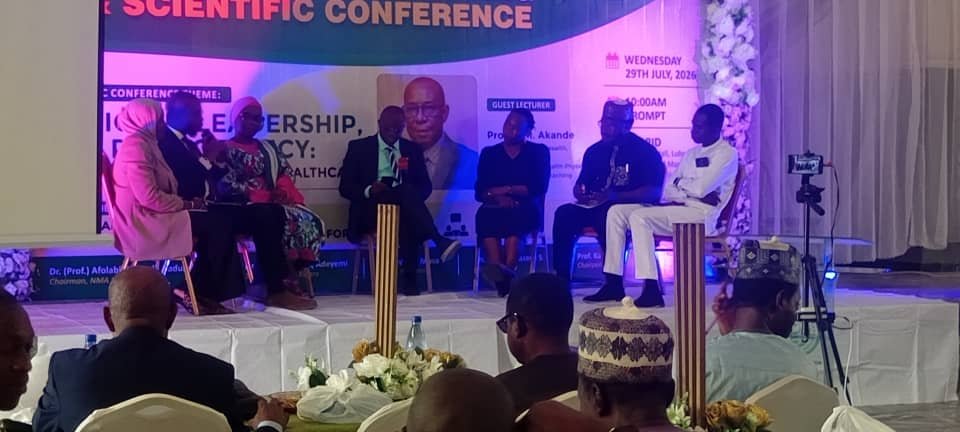
At a panel session during the conference, medical experts also called for the strengthening of Nigeria’s patient referral system to improve healthcare delivery and reduce avoidable complications arising from delayed referrals.
The panelists stressed that patients should be referred promptly from primary healthcare centres to secondary or tertiary facilities based on the severity of their conditions.
They expressed concern that some healthcare providers delay referrals until patients’ conditions deteriorate, making treatment more difficult and reducing the chances of positive outcomes.
The experts urged medical practitioners to provide complete documentation, including patients’ medical histories, investigation reports, and test results, before referrals.
According to them, proper documentation would promote continuity of care, eliminate unnecessary duplication of investigations, and reduce the financial burden on patients.
They also encouraged referring doctors to follow up on patients by obtaining feedback from receiving health facilities to monitor treatment outcomes and determine whether additional management is required.
The panelists further advocated the reintroduction of comprehensive discharge summaries detailing patients’ diagnoses, treatments, and prescribed medications to enhance continuity of care.
They also recommended wider adoption of telemedicine to improve communication among healthcare providers, strengthen patient monitoring, and enhance the efficiency of the country’s referral system.
The conference featured goodwill messages from representatives of the Kwara State Internal Revenue Service (KWIRS), the National Health Insurance Authority (NHIA), the Kwara State University Teaching Hospital, Al-Hikmah University, and other stakeholders, all of whom reaffirmed their commitment to strengthening healthcare delivery in Nigeria.
Editing: Abdullah Ahmed


