 0
0
 0
0
By Rasheedat Oladotun-Iliyas
Following the publication of a Digital Public Infrastructure (DPI) story by Rasheedat Oladotun-Iliyas highlighting the difficulties faced by a visually impaired man in Kwara State, Akeem Lawal, in accessing banking services because his fingerprints could not be captured during biometric enrolment, the First Bank of Nigeria, FBN, featured in the report, responded by asking him to go to any of their branches for a fresh fingerprints recapture.
The intervention demonstrated immediate institutional responsiveness.
On January 22, 2026, Lawal, together with his aide and the reporter, went into the FBN banking hall at Unity Road branch, Ilorin. He was promptly attended to. However, the recapture exercise revealed a deeper challenge: despite many attempts spanning about 30 minutes, his fingerprints could not be captured by the device.
He initially believed that the failure might be due to an illness he suffered in childhood that may have affected his fingerprints. Nevertheless, he expressed appreciation to both the bank and the reporter for facilitating another opportunity to enroll his biometrics.
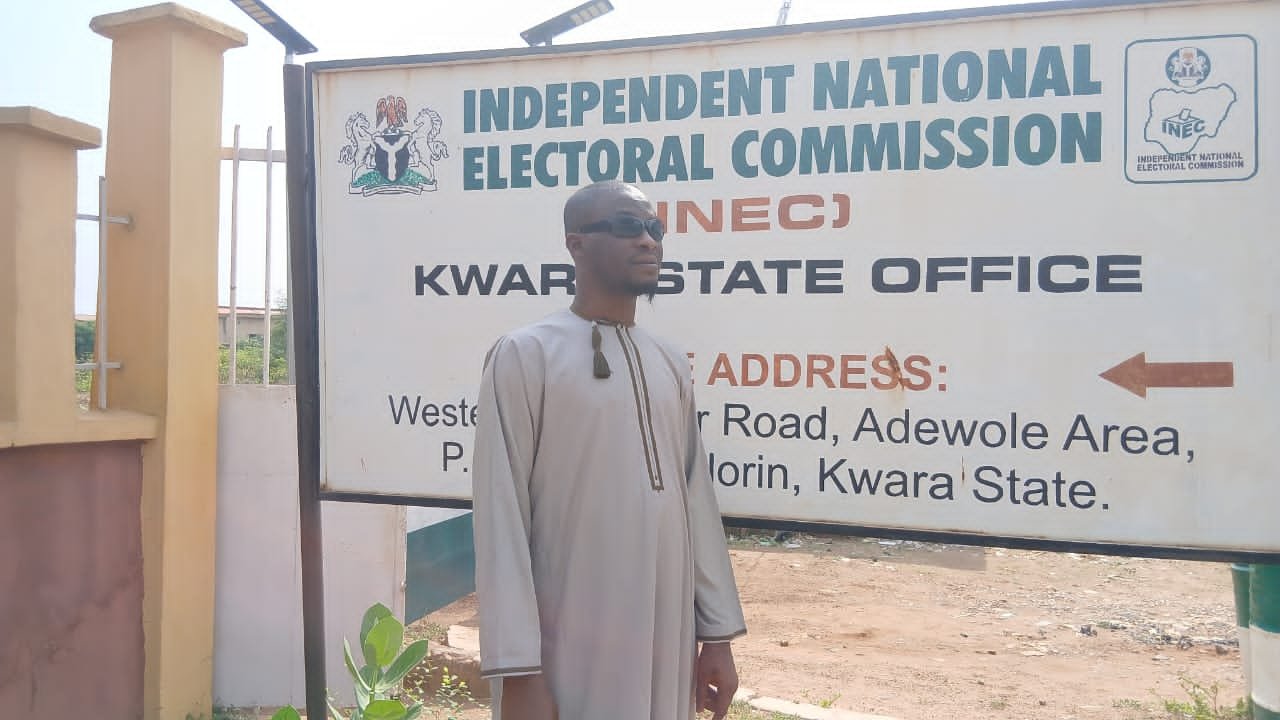
In a surprising development the following day, Lawal visited the Independent National Electoral Commission (INEC) office in Ilorin for card transfer ahead of the 2027 General Election. According to him, the fingerprint device used by INEC successfully captured his fingerprints within minutes.
“Each of the ten fingers, there was none that I attempted twice. Everything went on smoothly. So, the bank’s machine gives me concern. I did everything with ease. The ten fingers did not take me two minutes. I went for a card transfer and I was told that I had to do a biometric update. They captured the ten fingers. Perhaps, the bank’s machine is not sensitive enough. I use my fingerprint to unlock my phone and I don’t attempt it twice.”
The contrasting outcomes prompted a new line of inquiry as Lawal suggested that the problem might not be his fingerprints alone but the quality or capability of the fingerprint scanner used at the bank. He has since indicated his intention to visit other branches of the same bank to determine whether different biometric devices can successfully capture his fingerprints.
But as at the time of this publication he was yet to do so.
The experience illustrates that biometric exclusion is not always caused solely by a person’s physical characteristics. According to experts, device quality, sensor technology, software configuration, enrolment procedures and environmental conditions can all influence whether fingerprints are successfully captured.
For millions of Nigerians who increasingly rely on digital identity systems to access banking and government services as well as social interventions, inconsistent biometric performance across institutions could create unnecessary barriers to financial inclusion.
Expert evidence
Lawal’s experience is consistent with established research on biometric systems, although his observation alone does not prove that the bank’s device was defective particularly when the reporter witnessed some other bank customers had a smooth fingerprint capture.
The UK National Cyber Security Centre (NCSC) notes that older adults and people in certain occupations often produce lower-quality fingerprint readings and that “for some people, the problem can be so severe that they simply cannot use the biometric system.” The agency also explains that system performance depends on the sensor, operating environment and the characteristics of the users.
Similarly, the National Institute of Standards and Technology (NIST) in the United States found that fingerprint transaction failures are not always caused by poor fingerprints. Its 2025 Project Clearprint identified problems related to image packaging and operational processes that can lead to failed biometric submissions even where fingerprint images appear suitable.
The ISO/IEC Technical Report which provides international guidance on biometrics for elderly users, explains that dry skin, worn fingerprint ridges and reduced contact with scanners can make it difficult for contact-based fingerprint sensors to obtain high-quality images. The report adds that contactless or sub-dermal fingerprint technologies can reduce these problems.
A review published in the EURASIP Journal on Image and Video Processing also concludes that fingerprint quality is affected by several factors, including age, injuries, physiological conditions and sensor limitations, all of which influence recognition performance.
The United States Government Accountability Office (GAO) has likewise reported that between 2% and 5% of people’s fingerprints may be difficult to capture because of dryness, worn ridges, ageing or occupational wear, while dirty or poorly maintained optical scanners can further reduce image quality.
What still needs verification
While Lawal’s successful enrollment at INEC suggests that different biometric systems may perform differently, it is not sufficient evidence to conclude that the bank’s equipment is below standard.


