 0
0
 0
0
By Bukola Olajide
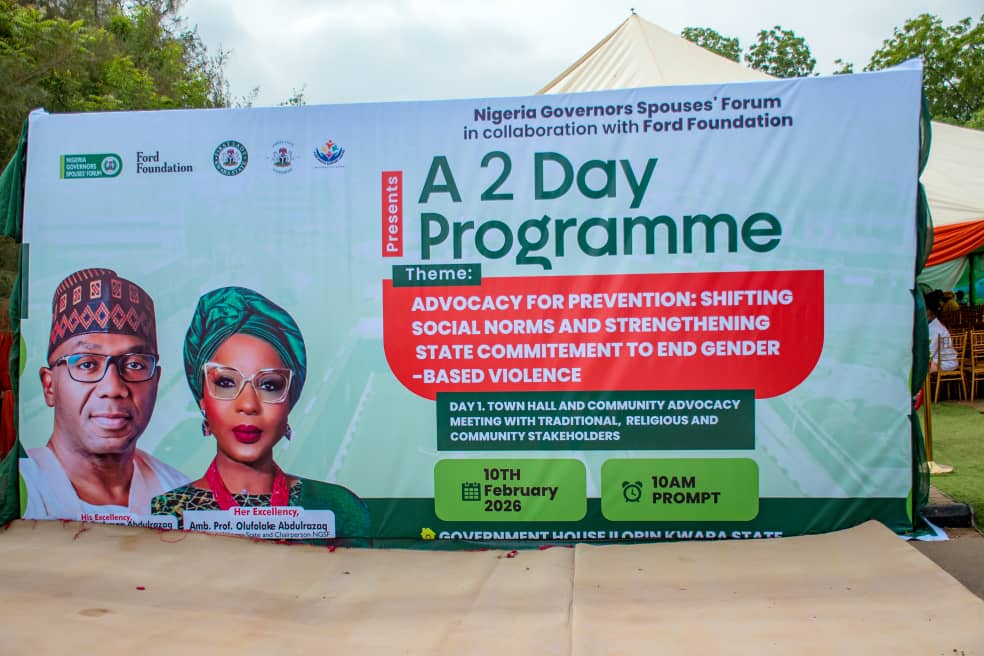
The Wife of the Kwara State Governor, Prof. Olufolake Abdulrazaq, has called for united and sustained action against Gender-Based Violence (GBV), stressing that neither religion nor culture justifies abuse, oppression, or harmful practices.Prof.
Abdulrazaq made the call during a two-day programme titled “Advocacy for Prevention: Shifting Social Norms and Strengthening State Commitment to End Gender-Based Violence.”
The event was organised by the Nigeria Governors’ Spouses Forum (NGSF) in collaboration with the Ford Foundation and held at the First Lady’s Office, Ahmadu Bello House, Ilorin.The First Lady, who chairs the NGSF, urged communities, government agencies, and civil society organisations to collaborate in promoting dignity, justice, compassion, and respect for human life.
She explained that the engagement aimed to strengthen advocacy efforts and partnerships to challenge harmful social norms while ensuring structural support systems and safe shelters for survivors of gender-based violence.
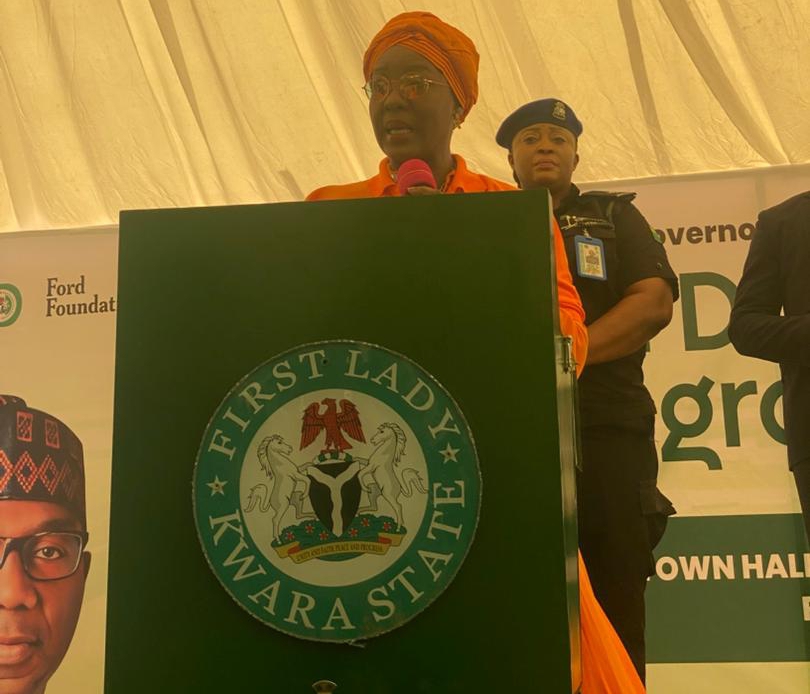
Prof. Abdulrazaq, who is also the Founder of the Ajike People Support Centre, emphasised that addressing GBV requires collective responsibility and sustained commitment at all levels.
In her remarks, the Commissioner for Women Affairs, Mrs. Afolashade Oluwakemi Opeyemi, outlined the state government’s interventions, including emergency response centres, confidential reporting channels, and survivor support systems designed to guarantee safety and dignity.
She revealed that more than 1,000 traditional rulers across the state have been trained to enhance community-level prevention and response mechanisms.
Mrs. Opeyemi described the programme as a call to action, urging traditional and religious leaders to support the enforcement of the Violence Against Persons Prohibition (VAPP) Law and ensure that survivors are referred to appropriate authorities without fear or stigma.
Similarly, the Commissioner for Social Development, Dr. Mariam Imam, said preventing gender-based violence requires community ownership, noting that government efforts must be supported by families, community leaders, and faith-based institutions.
During an interactive session, traditional, religious, and community leaders condemned all forms of gender-based violence.
They affirmed that culture and religion are pillars of protection, peace, and moral guidance, and rejected the misuse of social norms to justify violence.
They also agreed that transforming harmful social norms begins with leadership, accountability, and collective responsibility.
In a related development, Prof. Abdulrazaq called on spouses of local government chairmen to take active roles in preventing gender-based violence in their communities.

She described them as critical grassroots agents of change while speaking at a capacity-building programme for Wives of Local Government Chairmen, tagged Community GBV Champions Training, held in Ilorin on Tuesday.
The First Lady emphasised that social change begins at the community level and that harmful social norms such as victim-blaming, early and forced marriage, and rigid gender roles must be challenged.
“Gender-Based Violence is not only a violation of rights; it is a barrier to development, peace, and social cohesion,” she said.
“This training equips you with knowledge, skills, and practical tools to engage communities constructively, support survivors with empathy, and promote positive values that uphold respect, equality, and non-violence.”
In her address, an advocate against Sexual and Gender-Based Violence (SGBV), Dr. Christy Abayomi, said the training was designed to strengthen community response, documentation, and referral mechanisms, equipping local leaders to respond effectively and support survivors.
She disclosed that physical violence accounts for 25.6 per cent of reported cases, while sexual violence represents 14.6 per cent, noting that one in three women globally will experience violence in her lifetime.
She added that under-reporting remains a major challenge, as fear, stigma, and social pressure keep many survivors silent.
Speaking on legal protections and community responsibility, a lecturer at the University of Ilorin, Prof. Yusuf Abdul-Hamid, outlined the legal framework on SGBV, referencing national laws and international conventions protecting women and children.
He urged community and religious leaders to educate citizens on legal provisions, promote compliance, and ensure accountability for offenders.
“Grassroots champions can challenge harmful norms, promote legal awareness, support girls’ education, and engage traditional institutions,” he said.
He also called on courts to tighten the interpretation of consent, recognize economic deprivation and psychological harm, and award damages to survivors.
On community advocacy and dialogue facilitation, a resource person, Dr. Ibrahim Salawu stressed the need to turn discussions into action through community sensitization forums, school and youth outreach, religious and traditional engagements, formation of community watchdog groups, and the establishment of local reporting and referral systems.
He noted that awareness and education, shared values of justice and dignity, women’s leadership, youth engagement, and traditional and religious influence are key drivers of change.
The Kwara State Commissioner for Women Affairs, on her part, encouraged wives of local government chairmen to use their influence to reshape community attitudes and strengthen support systems for survivors.
“Together, we can build strong networks that not only respond to GBV cases but also prevent them through education, advocacy, and collaboration,” she said.
Radio Nigeria reports that the programme was organised by the Office of the Governor’s Wife in collaboration with the Ajike People Support Centre, the Nigeria Governors’ Spouses Forum, and the Ford Foundation.


