

 1
1
 0
0
By Bilkis Abdulraheem Lawal
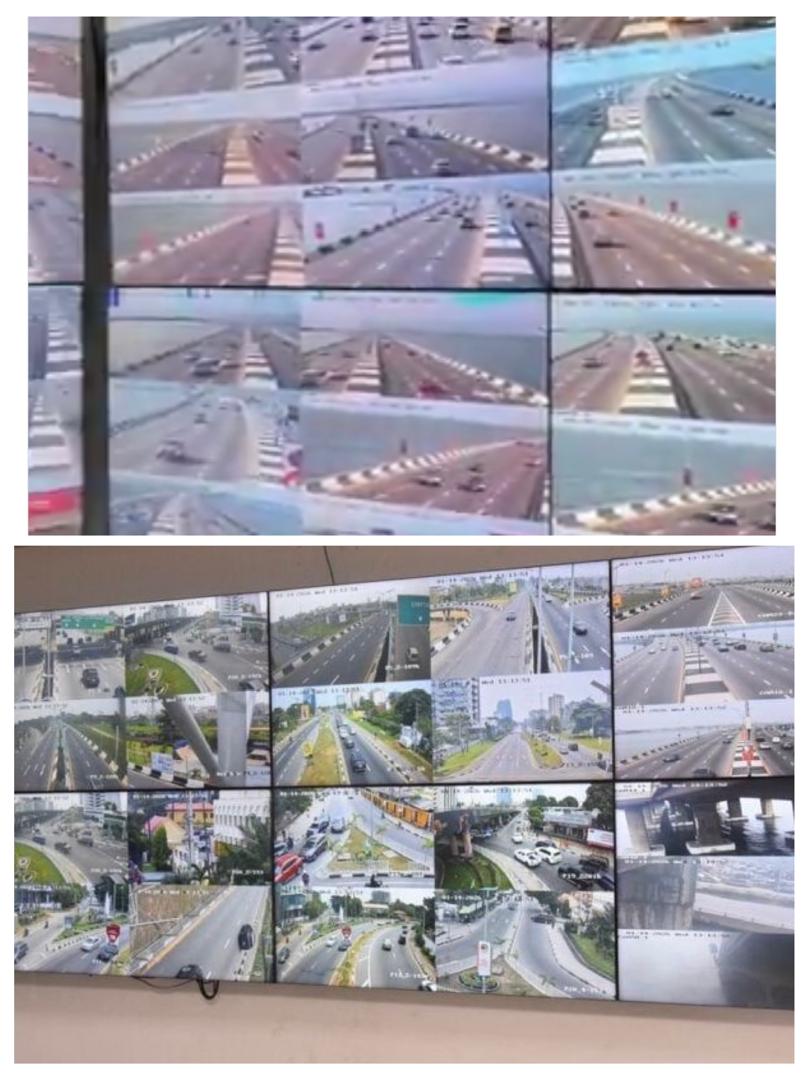
(Lagos Camera Control Rooms. Photo Credit: Facebook)
Lagos, Nigeria’s commercial nerve centre and arguably its most populous city, has long grappled with chronic traffic congestion, frequent over-speeding, reckless driving and traffic indiscipline. As road crashes and traffic violations continue to pose public safety concerns, the Lagos State Government is intensifying its reliance on digital systems that aligns with Nigeria’s evolving Digital Public Infrastructure.
At the heart of this shift is a technology-driven enforcement architecture that integrates surveillance, identity verification, and automated notifications, reducing physical interception on roads and strengthening compliance through data-driven regulation.
In 2018, the State introduced a centralised digital traffic enforcement system powered by Automatic Number Plate Recognition (ANPR) cameras. The system was expanded in 2025 with the deployment of Intelligent Transportation Systems (ITS) and e-police stations capable of detecting vehicles with expired documentation and offences such as over-speeding.
Motorists caught exceeding speed limits face a ₦50,000 fine, while other traffic violations attract penalties of ₦20,000. Offenders receive alerts via Short Message Service (SMS), enabling round-the-clock monitoring across major highways without physical stops.
Prior to the introduction of these technologies, physical enforcement of traffic rules in Lagos sometimes turned violent, with incidents ranging from officials being stabbed by drivers to motorists being brutalised. Unfortunately, such occurrences are still prevalent on some roads. Recent cases include a driver stabbing an official of the Lagos State Traffic Management Authority (LASTMA), with a broken bottle at the Ojota area of the state.
However, roads equipped with Automatic Number Plate Recognition (ANPR) and the Traffic Management System (TMS) are now helping to create safer transportation networks.
Expansion of Surveillance Infrastructure
In 2025, the Lagos State Ministry of Transportation, in collaboration with Huawei Technologies, deployed four additional Intelligent Transport System sites to strengthen traffic monitoring and speed detection.
Speaking during a press briefing, the Commissioner for Transportation, Oluwaseun Osiyemi, said the new installations were designed to complement existing traffic monitoring infrastructure.
“The new ITS sites will complement existing Automatic Number Plate Recognition (ANPR) cameras and other Traffic Management Solutions (TMS), reinforcing the state’s commitment to creating a safer and more efficient transportation network,” he said.
Mr. Osiyemi explained that the ITS infrastructure comprises checkpoint sites for speed monitoring and e-police sites for detecting traffic violations.
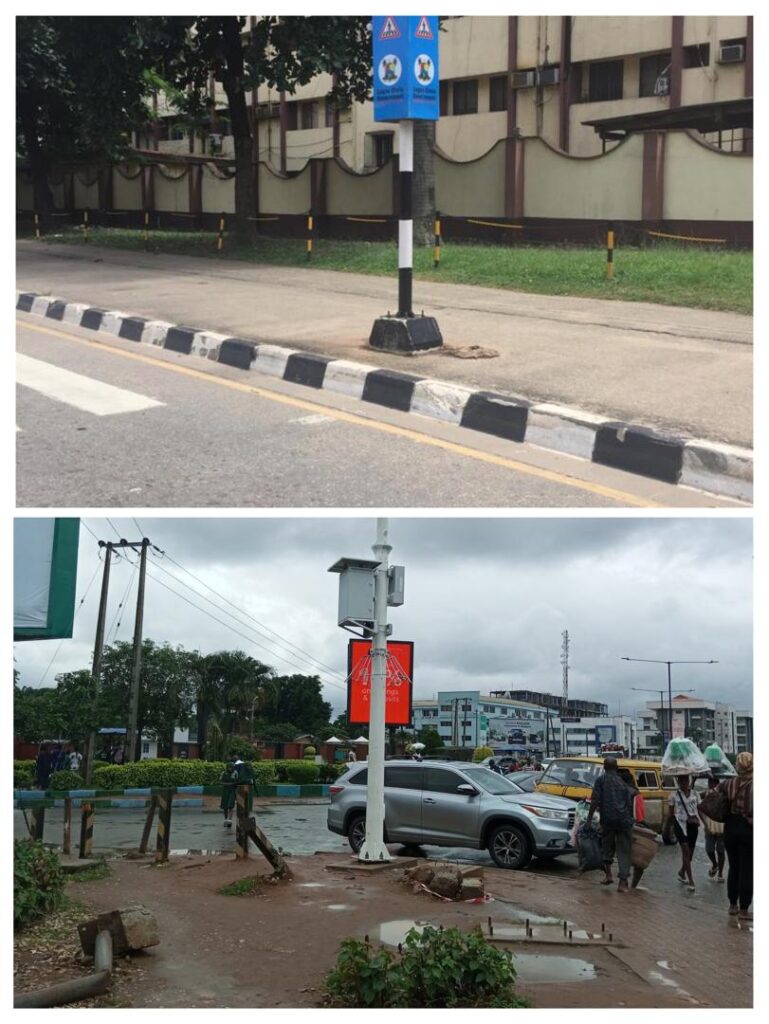
According to him, checkpoint monitoring systems have been installed at Alapere (80 km/h limit) and Nitel, Mobolaji Bank Anthony Way (60 km/h limit), while e-police sites at Allen Avenue junction and Nurudeen Olowopopo Road detect red-light violations, illegal U-turns, reverse driving, and lane indiscipline.
Offenders, he said, receive notifications from the Vehicle Inspection Service (VIS), detailing the nature of the offence and the applicable fines.
The Permanent Secretary of the Ministry of Transportation, Olawale Musa, noted that motorists retain the right to challenge penalties if they believe fines were wrongly issued.
Identity Integration Driving Enforcement Efficiency
Beyond surveillance hardwares, Lagos’ digitised enforcement strategy reflects a broader integration with Nigeria’s evolving Digital Public Infrastructure (DPI), the foundational digital systems that enable identity verification, payments, and secure data exchange across government services.
A critical enabler is Nigeria’s mandatory linkage of SIM cards to the National Identification Number (NIN). By connecting vehicle registration records, driver licensing databases, and telecommunications data, enforcement authorities can link traffic offences directly to verified phone numbers.
Speaking during a meeting with the Lagos State Consumer Protection Agency, the Managing Director/Chief Executive Officer of Lagos State Number Plate Production Authority, Olayanju Cole, advised motorists to take proper care of their vehicle number plates.
According to Cole, “your number plate is your identity on the road.”
This identity-linked enforcement reduces discretionary roadside policing, limits opportunities for extortion, and improves traceability. It represents a shift from manual enforcement to automated, identity-anchored compliance, a core DPI principle.
However, while identity-based enforcement improves efficiency, it raises important concerns regarding privacy, data protection, and transparency in data sharing among government agencies.
Addressing these concerns, the Commissioner for Innovation, Science and Technology, Olatubosun Alake, said the state has strengthened its cybersecurity infrastructure.
Speaking during the launch of the round-the-clock digitised traffic enforcement system, Mr Alake explained that the project involves a phased deployment of intelligent video surveillance infrastructure strategically located across Lagos.
“This three-pronged rollout ensures a comprehensive and cohesive approach to both traffic management and public safety,” he said.
Mr Alake further revealed that Lagos had successfully prevented two major data exfiltration attempts in the past year and has deployed 109 certified Data Protection Officers across ministries, departments, and agencies to safeguard sensitive information.
Federal layer: Cameras on Third Mainland Bridge
Digital enforcement is not limited to State authorities. In April 2024, the federal government installed speed-limit cameras on the Third Mainland Bridge as part of efforts to promote responsible driving, protect the infrastructure, and enhance road safety.
The Federal Controller of Works in Lagos, Olukorede Keisha, speaking on behalf of the Minister of Works, Dave Umahi, said the initiative is being implemented in collaboration with the Federal Road Safety Corps.
Keisha explained that the speed cameras have been strategically positioned at the bridge median to monitor and capture motorists who exceed the approved speed limit.
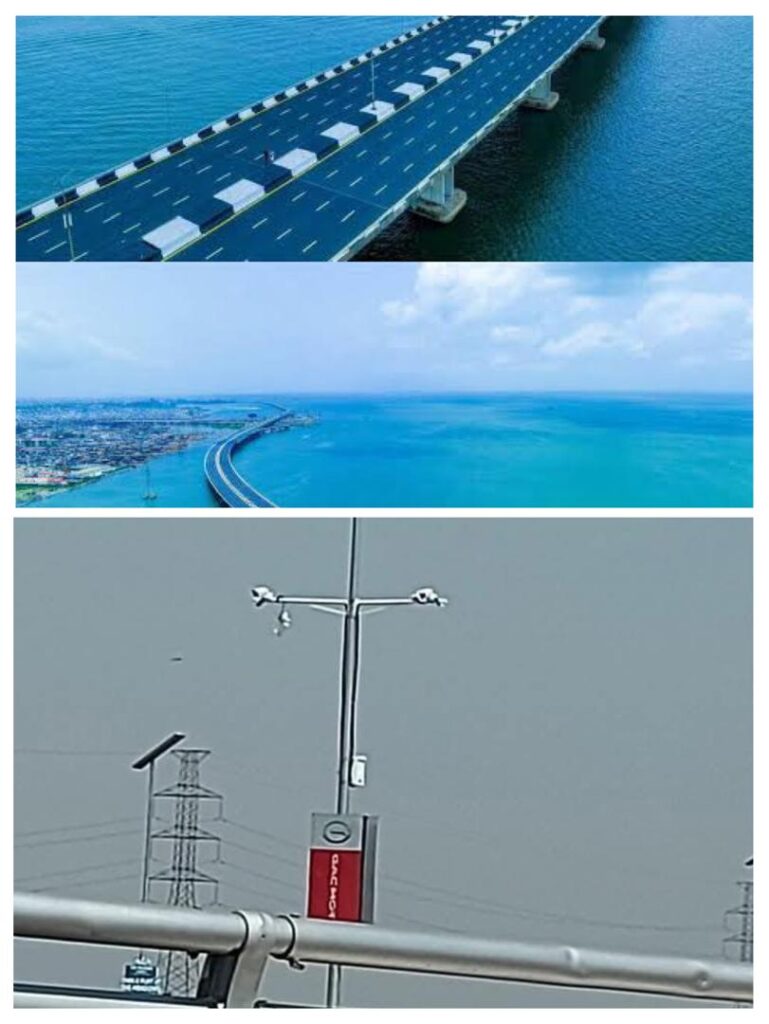
According to her, motorists caught violating the speed regulation will not be penalised instantly at the point of offence, rather at the renewal of the vehicle license, the driver will be surcharged.
The maximum speed allowed on the bridge has been set at 80 kilometres per hour.
This layered federal–state deployment reflects how DPI-based systems can operate across different levels of government while leveraging shared identity and licensing databases.
Motorists Reacts as Automation Replaces Interception
The growing use of digital enforcement has generated widespread public reactions, particularly among motorists and online.
One X user, @iam_temmyy, recently triggered online discussions after sharing how his uncle received an over-speeding violation notice from the Lagos State Government, accompanied by photographic evidence that clearly identified the driver.
According to the user, family members initially argued over who drove the vehicle at the time of the offence until they accessed the government portal and viewed a clear image of the driver.
“Face clear, evidence choke!!!,” the user wrote.
The post prompted several motorists to check their vehicle records online, with some discovering fines for offences ranging from over-speeding to operating vehicles without valid roadworthiness certification.
Screenshot of social media posts on X showing motorists sharing camera-captured over-speeding fine evidence issued by the Lagos State Government.
A Lagos-based civil servant, Taoheed Abdullahi, said he received a notification stating that he drove without valid insurance documentation, attracting a ₦40,000 fine. He later confirmed that his insurance certificate had expired earlier than other vehicle documents.
“I could not contest the fine because I was guilty as charged,” Abdullahi said.
Another motorist, a businessman Rafiu Babajide, narrated receiving multiple notifications regarding expired vehicle licences involving two of his vehicles on separate occasions.
He explained that the most recent incident occurred in December 2025 after he had taken his wife’s vehicle for roadworthiness assessment at the VIS office in Daleko in September. During the process, a discrepancy was discovered in the vehicle’s chassis number, which was later corrected at the Berger office.
Although the vehicle subsequently passed inspection in December, Babajide said surveillance cameras around the VIS office captured the vehicle and triggered a fine notification.
“I paid for the process earlier, but because of the discrepancy, the documentation was delayed. I believe I should not have been fined,” he said, adding that he had contested the penalty but had yet to receive a resolution as of the time of filing this report.
Babajide also recounted another instance when he and his wife travelled abroad and received fine notifications that their vehicle licence had expired despite the car being parked. Though some penalties were waived after contestation, he advocated for a grace period before enforcement kicks in, highlighting the need for proportionality in automated systems.
While acknowledging the effectiveness of the surveillance technology, Babajide advocated for the reintroduction of a grace period to allow motorists renew expired documents. His experience underscores a broader DPI governance question: how to balance automation with fairness, redress mechanisms, and administrative flexibility.
Authorities Defend Data-Driven Road Safety
The Public Relations Officer of the Lagos State Traffic Management Authority (LASTMA), Adebayo Taofeek, told the reporter that the adoption of digital monitoring technologies was aimed at strengthening road safety and improving traffic control.
“When drivers are not over-speeding, it becomes easier to control vehicles in the event of emergencies,” he said.
Mr Taofeek explained that the installation of speed limit cameras followed increased cases of over-speeding after the rehabilitation of the Third Mainland Bridge.
“Drivers began over-speeding because of improved road conditions. The government introduced speed cameras, and due to their effectiveness and reduction in accidents on the bridge, the initiative has been extended to other roads,” he said.
He added that ANPR cameras also detect vehicles operating with expired licences, noting that the Motor Vehicle Administration Agency sends renewal reminders to motorists between one month and three days before document expiry.
“Driving without valid vehicle documentation is illegal and aligns with international best practices,” he stated.
Mr Taofeek attributed most traffic violations to motorists’ negligence and procrastination but noted that compliance rates have improved significantly since the introduction of the system, describing the development as beneficial to residents and the state.
Lagos’ evolving traffic enforcement regime illustrates how Nigeria’s Digital Public Infrastructure is moving beyond service delivery into regulatory enforcement. By linking identity systems (NIN-SIM), vehicle databases, telecommunications networks, and automated surveillance, the state is building an integrated compliance architecture. This commenters say can lead to reduced physical confrontation, improved traceability, automated notifications, and higher compliance rates.
This report is produced under the DPI Africa Journalism Fellowship Programme of the Media Foundation for West Africa and Co-Develop


