

 0
0
 0
0
By Rasheedat Oladotun Iliyas
The Federal Government has announced new measures to tackle obstacles slowing down digital payments and e-commerce growth in Nigeria.
The initiative is designed to boost financial inclusion and widen access to reliable financial services for all Nigerians.
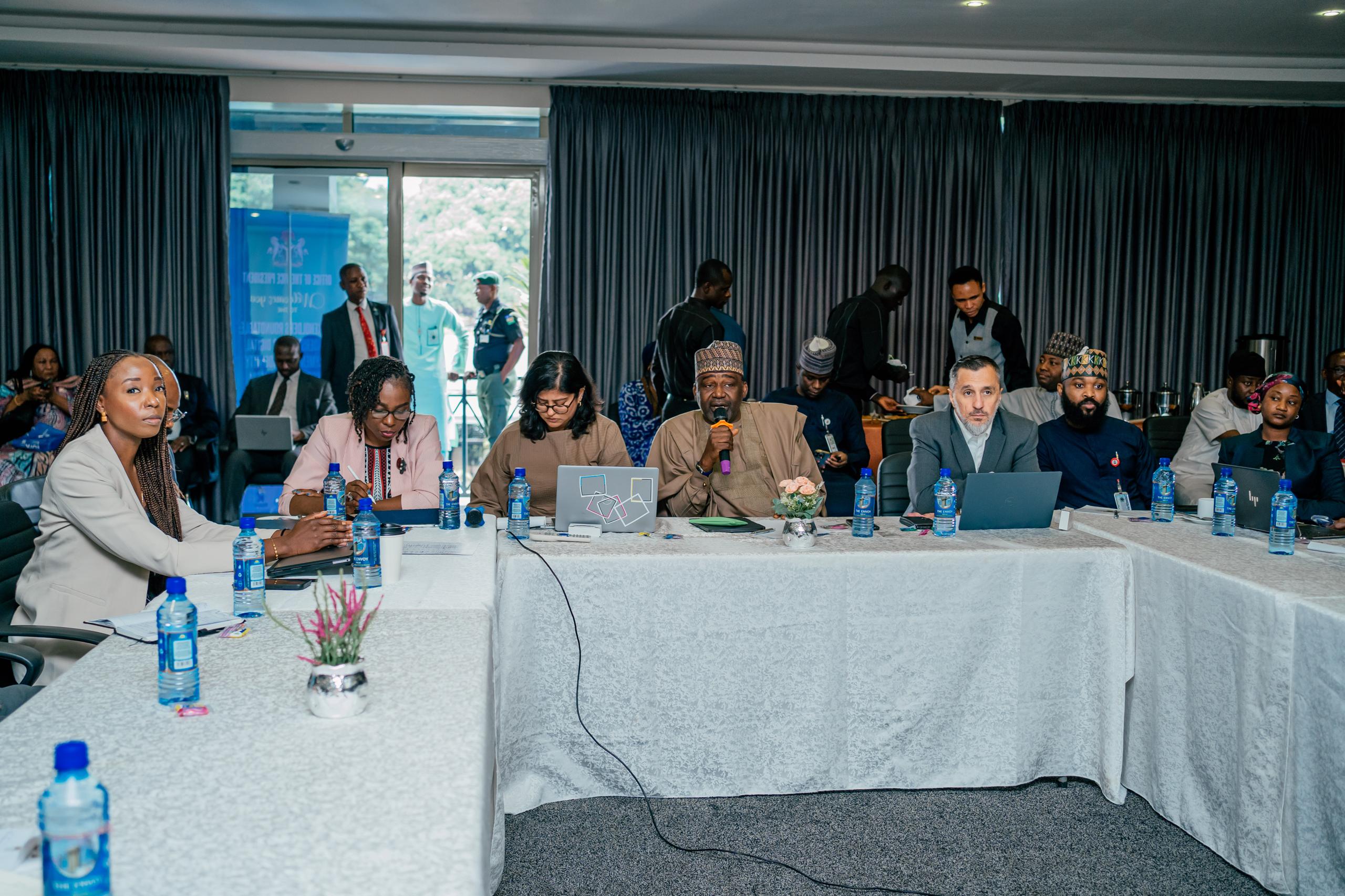
Deputy Chief of Staff to the President (Office of the Vice President), Senator Ibrahim Hassan Hadejia, made this known in Abuja at a stakeholders’ roundtable on digital trade and financial access.
He explained that President Bola Ahmed Tinubu’s government is determined to build a stronger payment ecosystem that will allow Nigerians to transfer funds smoothly through mobile phones and other digital channels.
Hadejia pointed out that while Nigeria’s financial system is relatively more advanced than in some Western countries, several hurdles still exist.

These, he said, include issues with identity verification, ease of payments, and cross-border transactions, which continue to hinder e-commerce expansion.
“From the Office of the Vice President’s standpoint, digital payments and identity remain the biggest barriers to unlocking Nigeria’s e-commerce sector. By tackling these issues, we can guarantee every Nigerian access to straightforward and dependable financial services,” he noted.
The Deputy Chief of Staff further highlighted that removing these barriers would bring broad economic gains.
According to him, “fixing these challenges is like killing many birds with one stone. India has shown how solid payment infrastructure can power both e-commerce and wider trade, and Nigeria can replicate this success.”
Also at the event, the Minister of Industry, Trade and Investment, Dr. Jumoke Oduwole, represented by her Special Adviser, Patience Okala, revealed that the ministry, in collaboration with the African Continental Free Trade Agreement (AfCFTA) Secretariat, had launched the AfCFTA Digital Pass to strengthen cross-border trade and digital identity. She expressed confidence that outcomes from the dialogue would enrich the initiative.
Principal Research Fellow at the International Economic Development Group of ODI Global, Dr. Max Mendez-Parra, also emphasized the role of digital trade in shaping Africa’s economic trajectory.
He disclosed that ODI has been assisting AfCFTA in its digital and investment protocol negotiations, stressing that full adoption would significantly transform Nigeria’s economy.
For his part, Mallam Salisu Dasuki Nakande, Special Assistant to the President on ICT Policy, recalled that work on seamless digital payments started two years ago under the Vice President’s guidance.
He said the current stage aims to align payment systems so Nigerians can conduct transactions conveniently within the country and across African markets.
The roundtable, organized by the Office of the Vice President, brought together policymakers, business leaders, and international partners to deliberate on solutions to challenges facing digital payments.
Participants concluded that expanding financial access would unlock e-commerce’s vast potential, spur job creation, and accelerate Nigeria’s economic growth.
End


