 1
1
 0
0
Feature image
In a recent interview with Radio Nigeria, Ugochi Ehiahuruike recalled the excitement she felt when she ventured into rice farming in 2024.
For years, she had worked as a civil society advocate in southeastern Nigeria, focusing on social justice, community empowerment and gender inclusion.
Farming was new to her. But stories from farmers after the 2024 harvest encouraged her. Rice prices were high and many farmers reportedly made good money.
Motivated by the success stories, Ehiahuruike joined three other women farmers in Anambra State in 2025 to invest in rice cultivation.
Each of them contributed ₦650,000, raising a total investment of about ₦2.6 million through savings and personal sacrifices.
However, the outcome turned out differently from their expectations.
“It is disheartening,” Ehiahuruike said. “People are celebrating that food prices have come down, but farmers are the ones suffering.”
According to her, rice planted early in the season was expected to be harvested before December 2025.
But labour shortages delayed the process. Many workers were busy on other farms and later travelled for the Christmas holidays.
By the time labour became available again, several weeks had passed. “Now it is February and we are still unable to harvest everything. The rice is already wasting on the farm,” she said.
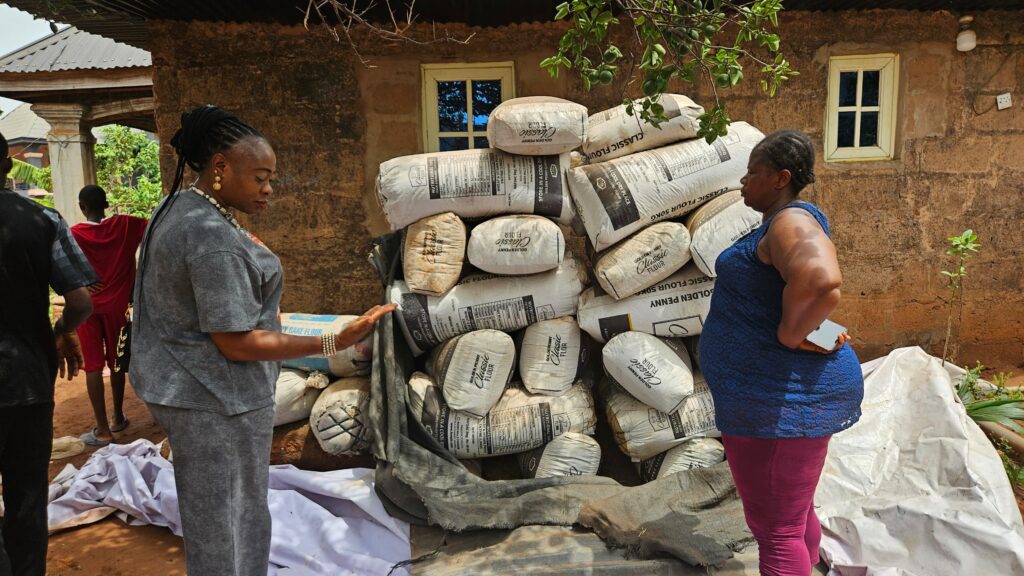
“From the ₦2.6 million investment, we have harvested only about 30 bags of unprocessed rice. After milling, the quantity may reduce to about 15 bags.
At current prices, each farmer may earn about ₦150,000—far below the ₦650,000 invested.
That does not even include the cost of cutting, parboiling, milling and destoning the rice,” she lamented.
“Before processing the rice, we already know we have made a huge loss,” Ehiahuruike lamented.
“People are celebrating that food prices have come down. But farmers are the ones suffering.”
Ehiahuruike is still struggling to complete the harvest months after the farming season ended. What was once an exciting investment now feels like a painful lesson.
Relief in the markets
Her story is not unique as thousands of farmers across Nigeria’s farming communities are quietly confronting a crisis that contrasts sharply with the relief consumers felt across markets.
For millions of Nigerian families battered by years of rising inflation, the recent drop in food prices has brought welcome relief.
Throughout 2024 and early 2025, the cost of staple foods soared dramatically. Rice, beans, maize and garri became luxuries for many households.
At the height of the crisis, a 50-kilogram bag of rice sold for more than ₦100,000 in some parts of the country.
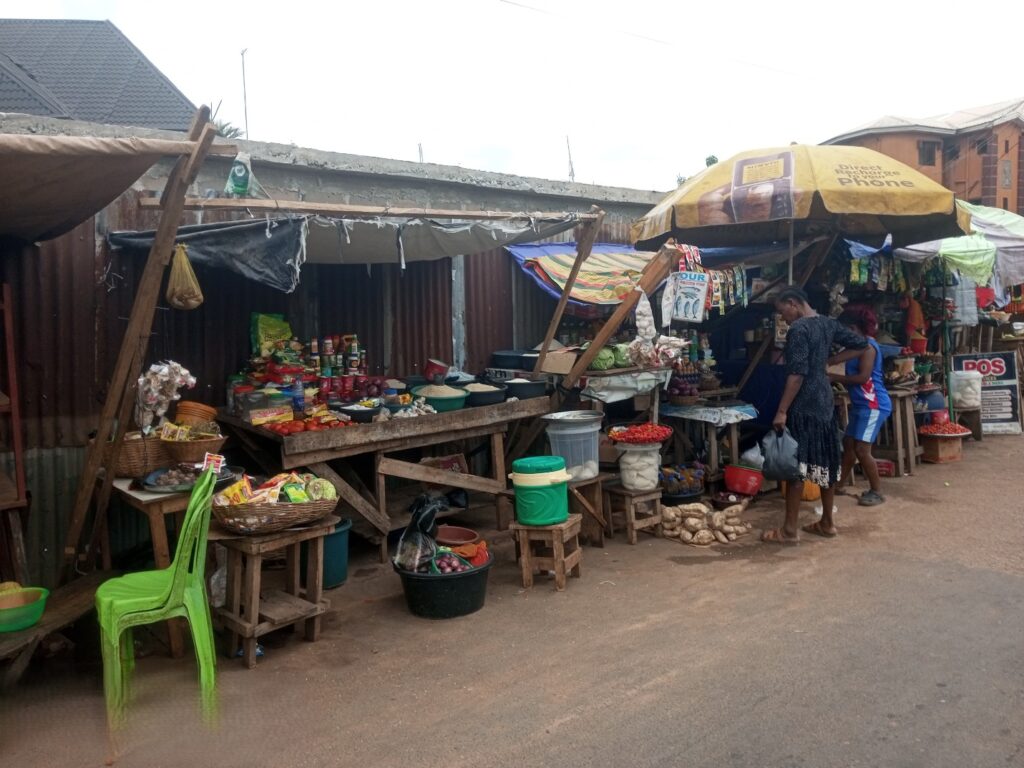
In its Selected Food Price Watch report released in December 2025, the National Bureau of Statistics (NBS) noted that Nigeria recorded a significant year-on-year and month-on-month decreases in the cost of essential staples, including rice, beans, garri, and tomatoes.
For many Nigerians including Mary Iyabo, a civil servant in Awka, Anambra State, the NBS report is a reflection of reality. “During 2024 Christmas season, food was extremely expensive with a bag of rice sold around ₦100,000. Many families reduced the quantity they bought.”
“But last December, rice sold for around ₦50,000 to ₦60,000. People could finally afford to cook better meals again.”
Mfon Ekanem, another resident of Awka, said many households breathed a little sigh of relief. “It was a relief especially for struggling families. People could buy more food than before. It is not yet uhuru but it is better than it was.”
A silent crisis in rural Nigeria
Yet the relief being felt in urban markets does not reflect the quieter reality unfolding on Nigerian farms. Across farming communities in Anambra, Imo, Ondo, Osun, Nasarawa and other states, farmers are lamenting the drop in food prices without a corresponding reduction in production costs.
“Fertilisers remain expensive. Agrochemicals go at unfriendly prices. Labour costs have climbed sharply. Diesel used for irrigation, transportation and processing are not cheap,” ‘Wumi Kehinde, a farmer based in Osun State regretted.
Smallholders constitute over 70% of the entire farming population in the country. Despite carrying the burden of feeding a country with more than 220 million people, Nigeria continues to struggle with food insecurity.
Despite that Nigeria faces acute food insecurity, driven by inflation, conflict, climate shocks and weak agricultural systems, many of the people producing the food are themselves financially vulnerable.
“Doing a good thing in a bad way” – Kehinde
Kehinde said the current situation is pushing many farmers to reconsider agriculture altogether. “The major challenge is that basic farm tools like cutlasses and hoes, herbicides, insecticides and labour are still very costly.”
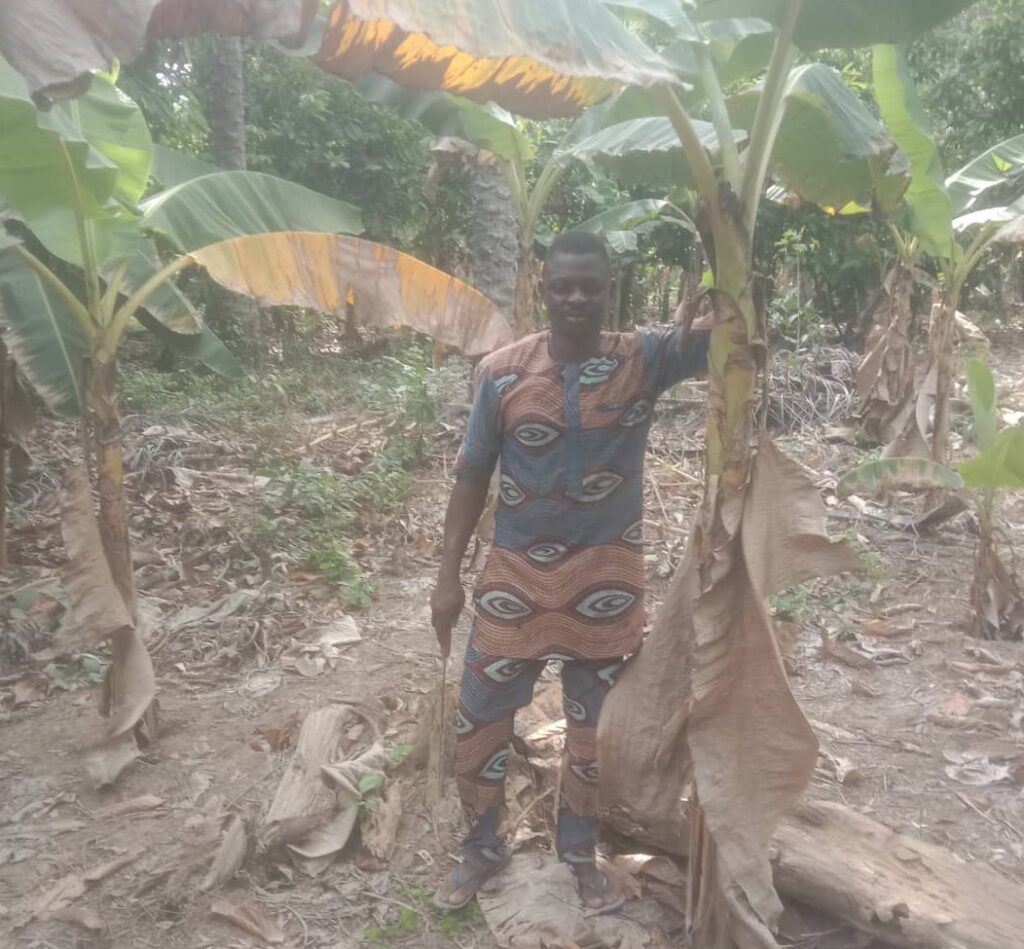
After months of work and significant investment, many farmers are forced to sell their harvests at a loss. The situation is even worse for farmers who financed their farms with loans.
“Reducing food prices helps consumers, but government is doing a good thing in a bad way,” he said.
“Instead of forcing prices down in the market, government policies should target the cost of production. If fertilizers, tractors and other inputs are subsidized, food prices will naturally drop.
From Ondo State, South-West Nigeria, Charles Christopher recalled how his family incurred historic loss due to the drop in prices of food items. “We lost very significant amount. That’s why my sisters couldn’t afford to go school.
“The high cost of farm produce in 2024 lured me and my brother into investing without thinking. We put our money into cassava farming and now they are wasting away in the farm. We don’t see people to buy them. My two sisters are now with me looking for what to do.
A vehicle (Cabster) load of cassava in 2024 was sold at N400,0000 and above. Now no one agrees to buy it for N120,000. a sack of garri that was sold for N30,000 then is now N6,000.
“Labourers were collecting #3000 for a day job. They now take at least 8000. Cassava stem that we were throwing away before are now being bought. We invested in 2025 with pains due to the cost of things.
“I don’t need to tell my dad about this interview so that he does not start crying all over again. He said Tinubu used farmers to buy the heart of Nigerians.
Shrinking farms and fading hope
The situation threatens to worsen food insecurity across the country. Already, a rice farmer in Anambra State, Uju Ananwude, has drastically reduced the size of her farm. “Personally, I lost almost everything,” she lamented.
Ananwude operates both as a seed rice farmer and a paddy rice producer — two ventures that require heavy investments. In 2025, she cultivated five hectares of seed rice and two hectares of paddy rice.
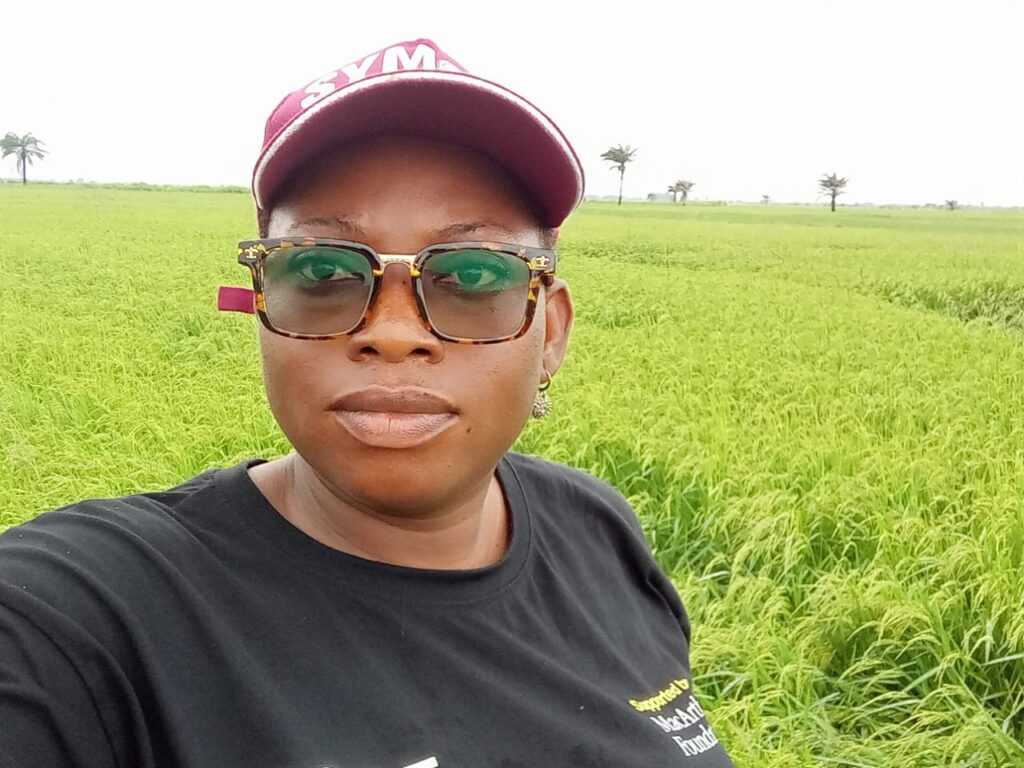
This year, she is not sure of cultivating one hectare as the cost of production remains staggering. “Producing one hectare of seed rice costs about ₦2 million. For paddy rice it is around ₦1.5 million.”
“Despite cultivating seven hectares last season, my total return was only about ₦650,000 far from my investment. I won’t continue like that this year,” she said.
Widespread tragedy
Jonathan Oklo, from Nasarawa State, also has a tale of woes to tell. He ran a 50-hectare rice farm and about 10 hectares of maize.
Oklo recalled, “Last year, cost of production was higher than in previous years. This was largely influenced by the high prices of food items in 2024.
“A bag of maize that sold for about ₦100,000 the previous year dropped to around ₦18,000. Some farmers left their crops unharvested because the cost of harvesting would exceed what they would earn from the produce.
He attributed the zeal with which they farmed in 2025 to the profit farmers made in 2024. “We did not mind the high cost of fertilizer, labour, mechanisation and transportation.
“But at the end of the day, the cost of production increased but prices of grains fell sharply. I spent close to 40 percent of my resources on harvesting including transportation. But, in 2024, buyers were coming to the farm to buy.
“Companies that were off-taking stopped due to unfavourable business climate as they were uncertain about government policies. We sold our productsl at give-away prices.
Oklo feared that if this problem is not addressed quickly, Nigeria could face a serious food crisis. “Personally, I have decided to reduce the size of land I cultivate.
“Many other colleagues are considering the same thing. Some may not farm at all this year because they no longer have the resources to continue.
Why smallholder-farmers matter
Commenting on the situation, agribusiness entrepreneur, Ethelbert Umeh warned that ignoring farmers’ struggles and plights could threaten Nigeria’s long-term food security.
“The market is currently flooded with cheaper alternatives while farmers remain trapped in high production costs. If farmers continue leaving agriculture, Nigeria’s food security will be at risk.”
Agriculture and sustainability expert, Abraham Ogwu, described smallholder farmers as the backbone of Nigeria’s food system. “Smallholder farmers produce about 75 to 80 percent of the food consumed in Nigeria. Policies that overlook their realities could therefore backfire,” he warned.
Fixing the broken equation
For Umeh, government should focus on reducing the cost of production. “If government truly want to reduce the cost of food, they should first reduce the cost of production.”
“That automatically impacts the prices of food and the relief will go round every stratum of the society.
Umeh and Ogwu also recommend improved input subsidies, stronger agricultural financing systems and better regulation to prevent farmers from buying fake or adulterated farm inputs.
For Ogwu, Nigeria must also adopt a more structured agricultural market system linking farmers directly to processors and manufacturers through guaranteed contracts.
“Such arrangements would provide stable prices for farmers while ensuring consistent supply for industries. The key is balance,” he said.
As many farmers are hesitant about production this year, indications are strong that some will reduce their farm size while others may abandon farming entirely.
The implications for the country go far beyond individual losses. Respondents warned that as the country celebrate cheaper food today, the situation may become worrisome in near future if attention is not paid to the plights of farmers.
Compounding the challenge is the persistent hike in the pump price of petroleum products, which has significantly increased the cost of transporting farm inputs, running irrigation pumps, powering processing machines and moving produce from farms to markets. Farmers say the rising fuel costs is further eroding their already shrinking profit margins, making agricultural production even less attractive.
End


