 1
1
 0
0
By Bilkis Abdulraheem Lawal
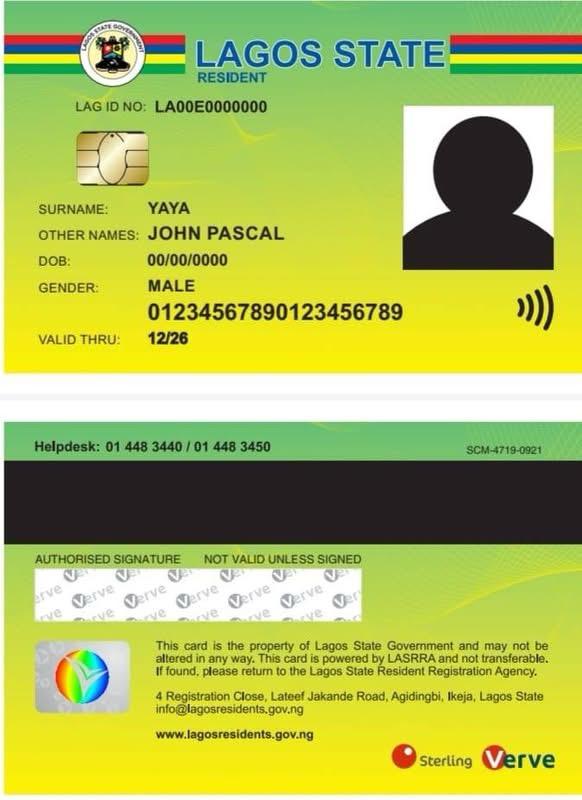
When Marvelous Odeyemi began processing her admission into Lagos State University, she was expected to submit academic credentials and examination results. However, considering the growing importance of the state-issued digital identity card, the Lagos State Residents Registration Agency (LASRRA), she had to secure the card at her nearest local government office.
Although she already possessed a National Identification Number (NIN), Odeyemi said obtaining the LASRRA card became necessary because it increasingly serves as proof of residency for accessing certain state services.
“I mostly use my NIN as identification,” she said, “but I got the LASRRA card because it was required.”
Her experience reflects a broader digital transformation unfolding in Lagos, where the state government is steadily positioning LASRRA as a major component of its digital public infrastructure strategy.
Established by law in 2011 and formally launched in 2013 under former governor Babatunde Raji Fashola, LASRRA was created to build a centralised database of all Lagos State residents.
In 2022, the state upgraded the card under the “LASRRA 2.0” initiative. The upgraded card functions as both an identity credential and a payment-enabled smart card linked to residents’ biometric and demographic records.
The state government says the project is designed to integrate residents into e-governance systems, improve access to public services and support Lagos’ ambition of becoming a smart city. In addition, the database assists government agencies in planning transportation systems, healthcare facilities, waste management, housing and social welfare programmes based on more accurate population data.
The card also enables residents to access services tied to transportation, health, education and financial inclusion initiatives.
Identity as Digital Public Infrastructure
Beyond serving as proof of residency, LASRRA says the card has the ability to carry out 28 different functions, including access to apply for loans through the Lagos State Employment Trust Fund, access to transportation services such as Bus Rapid Transit and LagFerry systems.
“With the LAG ID Card, our children can have easier access to educational services from primary to secondary to tertiary institutions in the state,” the agency stated.
The older residency cards with limited functionality are being replaced with the upgraded smart card, which carries a five-year validity period.
The smart card programme received a major boost in July 2022 when Sterling Bank Plc partnered with the Lagos State Government to support the issuance of the first three million cards.
Sterling Bank’s Chief Executive Officer, Abubakar Suleiman, said the partnership aligned with previous collaborations between the bank and Lagos State in transportation and digital payment systems.
“Sterling Bank is the pioneer financial partner of this initiative, providing support for the first three million cards that will be distributed to residents,” he said.
According to the agency more than 6.4 million residents have registered across the state’s estimated over 22 million population. Over four million adults with 2.4 million below the age of 16.
Speaking during the relaunch, Lagos State Governor Babajide Sanwo-Olu described the initiative as part of the administration’s smart city vision.
“This relaunch is particularly significant because it demonstrates our administration’s commitment to the Smart City Vision, which seeks to integrate and embed cutting-edge technology into our daily lives and our daily interaction with government and public services,” he said.
Concerns Over Exclusion and Access
As Lagos expands the integration of LASRRA into public service delivery, concerns are also emerging about the risk of exclusion for vulnerable populations, those who faced registration challenges, migrants and people living in informal settlements.
Residents registered under LASRRA are often prioritised for programmes such as the Ilera Eko Health Insurance Scheme, scholarship opportunities, welfare support, skill acquisition initiatives and small business financing facilitated through state agencies.
For 34-year-old food vendor Aishat Bello, the absence of a LASRRA card nearly prevented her from enrolling in a subsidised healthcare programme after she relocated from Kwara State to Lagos three years ago.
“I had my NIN and voter’s card, but they still asked for LASRRA,” she said. “At that time, I had not done it because I did not know it would become important for healthcare.”
She continued paying out-of-pocket for medical treatment for herself and her children until she completed the registration.
Another resident, 39 year old Omosalewa Moruf, said she encountered similar difficulties while trying to apply for a state-supported training and empowerment programme targeted at farmers.
Moruf, who owns a poultry farm business in the Ikorodu area of the state, said she was unable to complete her application because she did not possess a LASRRA card at the time.
“My colleague told me the programme was mainly for verified Lagos residents,” she said. “I had my NIN already, but they said I still needed LASRRA.”
She eventually registered at his nearest enrollment centre.
Technology expert Bilal Yusuf warned that identity systems tied too rigidly to social services could deepen exclusion if governments fail to accommodate residents lacking formal documentation.
“Many informal residents do not have utility bills, or other documents often required to prove residency,” he said.
He added that while digital identity systems can improve service delivery and reduce fraud, governments must ensure that vulnerable groups are not denied essential healthcare, education or welfare support because of bureaucratic barriers.
LASRRA, NIN and the Risk of Duplication
Although LASRRA is designed for residency verification and state-level services while the National Identification Number (NIN) system managed by the National Identity Management Commission serves as Nigeria’s national identity framework, both systems collect overlapping biometric and demographic data.
Technology experts say maintaining parallel identity systems without proper interoperability may lead to administrative duplication and costs, create verification inefficiencies and increase cyber security risks.
“When you maintain two massive biometric databases without deep technical alignment, it introduces several friction points,” he said.
According to Yusuf, identity mismatches between LASRRA and NIN records could disrupt access to government services while increasing public spending on duplicate infrastructure and verification systems.
He also warned that multiple biometric databases create broader cybersecurity risks.
“If one of those databases is breached, sensitive biometric data belonging to millions of people could be compromised, and attackers may cross-reference information from both systems,” he said.
Yusuf argued that the ideal approach would involve interoperability, where the NIN functions as the foundational identity layer while LASRRA adds Lagos-specific residency information.
“In a perfect system, LASRRA should pull verified identity data from the NIN database while adding local information relevant to Lagos residents,” he explained.
“When identity systems are not properly interoperable, citizens bear the burden,” he said. “People are asked to provide the same fingerprints, photographs and documents multiple times because the databases do not communicate effectively.”
According to him, effective interoperability would allow identity platforms to securely exchange verified information without requiring residents to undergo repeated enrolment exercises.
“In an ideal system, NIN should function as the foundational identity layer, while LASRRA builds on it by adding Lagos-specific residency information,” Yusuf explained. “That way, residents do not have to continuously duplicate registration processes.”
He further stressed the importance of strict compliance with the Nigeria Data Protection Act (NDPA) 2023, independent oversight and accessible mechanisms for correcting identity errors or reporting identity theft.
“To build public trust, the system must move beyond simply connecting data to protecting it,” he added.
In April 2025 the Lagos State Government began integrating NIN into the Lagos State Single Social Register to support the Federal Government’s cash transfer programme for vulnerable households.
Commissioner for Budget and Economic Planning, Ope George, said the exercise was necessary to improve the accuracy of social intervention programmes.
According to him, the integration followed directives requiring states to update the National Social Register with verified NINs and geo-location data.
Permanent Secretary in the Ministry of Economic Planning and Budget, Olayinka Ojo, said the exercise would help eliminate duplication and ensure interventions reach intended beneficiaries.
LASSRA Card as a Healthcare Gateway
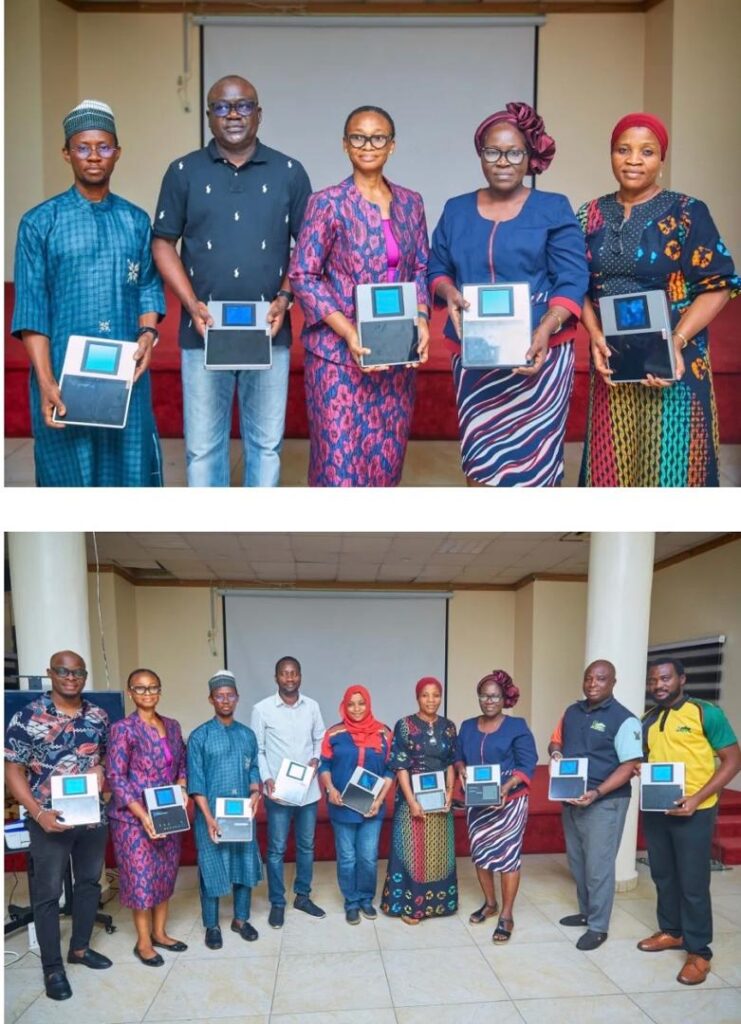
In 2025, the Lagos State Health Management Agency (LASHMA), deployed biometric card readers across 100 facilities under the ILERA EKO Social Health Plan, allowing hospitals to authenticate patients through the LASRRA database.
According to LASHMA’s Permanent Secretary, Dr Emmanuella Zamba, the technology is intended to prevent impersonation and ensure that healthcare services reach the right beneficiaries.
“This innovation strengthens the integrity of our health insurance system and ensures the right individuals receive care without delay,” she said.
Questions Over Renewal and Accessibility
Efforts to obtain official responses from the Agency on concerns relating to interoperability, data integration, card renewal and possible exclusion lasted for about four weeks without success.
The reporter first contacted the agency’s spokesperson via WhatsApp on April 25 and followed up with a phone call on April 27. During the telephone conversation, the spokesperson explained that she had only recently been transferred to the agency and promised to revert after consultations.
Later that day, she requested that detailed questions be forwarded to her via WhatsApp, which the reporter subsequently did.
Although the reporter continued follow-up calls at least twice weekly, the spokesperson repeatedly stated that the General Manager was indisposed and therefore unavailable for an interview.
At one point, the spokesperson informed the reporter that responses to the questions had already been prepared by her department but could not be released without the approval of the General Manager.
However, no official response was received from the agency as of the time this story was published.
For some residents, the LASRRA card is gradually becoming a practical requirement for interacting with state institutions.
Ilesanmi Fagboye, who possesses the temporary upgraded card, said the registration process took three days but believes the initiative supports government planning.
“I think it helps the government in planning for development,” he said.
However, he admitted that he has not collected the smart card after the temporary expired in June 2025 due to time constraints.
Lagos State Government says residents maintain the same unique LASRRA ID number even after the card expires. Adding that the renewal cycle every five years is necessary, to ensure residents’ information remains accurate and regularly updated. But technology experts noted that periodic renewals could create additional administrative and financial burdens for residents, particularly low-income earners, students and informal workers who may struggle to revisit enrolment centres.
Experts warn that expired cards could eventually disrupt access to services linked to residency verification if renewal processes are not made seamless, accessible and digitally integrated. They argue that for a digital identity system to function effectively at scale, regular data updates must be balanced with convenience, interoperability and ease of access for residents.
Another resident, Lateefa Oloye, said she rarely uses her LASRRA card and still keeps the older version issued before the smart card rollout.
Meanwhile, Linda Joseph said she has not registered because she currently sees little need for it.
Technology Expert, Yusuf, warns that identity systems tied too rigidly to documentation requirements may unintentionally exclude low-income residents, migrants and people living in informal settlements.
Yusuf noted that many residents do not possess utility bills or formal tenancy documents required to prove residency.
“Many informal residents do not have rent receipts or utility bills to prove residency,” he said.
Inside LASRRA Registration Process
This reporter visited one of the LASRRA enrolment centres to revalidate her older card. On the three visits, she didn’t see any resident to process new registrations or revalidate older residency cards.
An official at the centre explained that both new registration and revalidation typically take between two and three working days before applicants are scheduled for biometric capture and issued a temporary card.
According to the official, residents are expected to use the temporary card pending the production of the upgraded smart card, which may take up to one year before it becomes available for collection. Cardholders are thereafter required to return the temporary card in exchange for the permanent smart card which expires after five years.
The lengthy processing timeline raises further questions about efficiency and accessibility.
Beyond Lagos State, several other states across Nigeria have also introduced state-level digital identity systems as part of efforts to strengthen governance, improve planning and expand access to public services.
In Kwara State, the Kwara State Residents Registration Agency manages the State Security Identification (SSID) smart card scheme, designed to support social inclusion, security coordination and economic planning.
Kaduna State operates a residency identity system through the Kaduna Residents Identity Management Agency (KADRIMA), where residents are issued a mandatory all-in-one card used for accessing government services and social welfare programmes.
Similarly, Edo State introduced the Edo State Residency Identity Card initiative to develop a comprehensive demographic database aimed at improving governance, planning and public service delivery.
In Oyo State, the state residency identification programme captures residents’ data to support security operations, development planning and access to government interventions.
Analysts say the growing adoption of state-level identity systems reflects how subnational governments are increasingly embracing digital identity infrastructure to improve administration and targeted service delivery.
As Lagos continues its transition toward a digitally connected urban economy, LASRRA is increasingly emerging not merely as a residency card scheme, but as a key component of the state’s evolving digital governance infrastructure.
———————————————————–
This report is produced under the DPI Africa Journalism Fellowship Programme of the Media Foundation for West Africa and Co-Develop


