 1
1
 0
0
By Rasheedat Oladotun-Iliyas
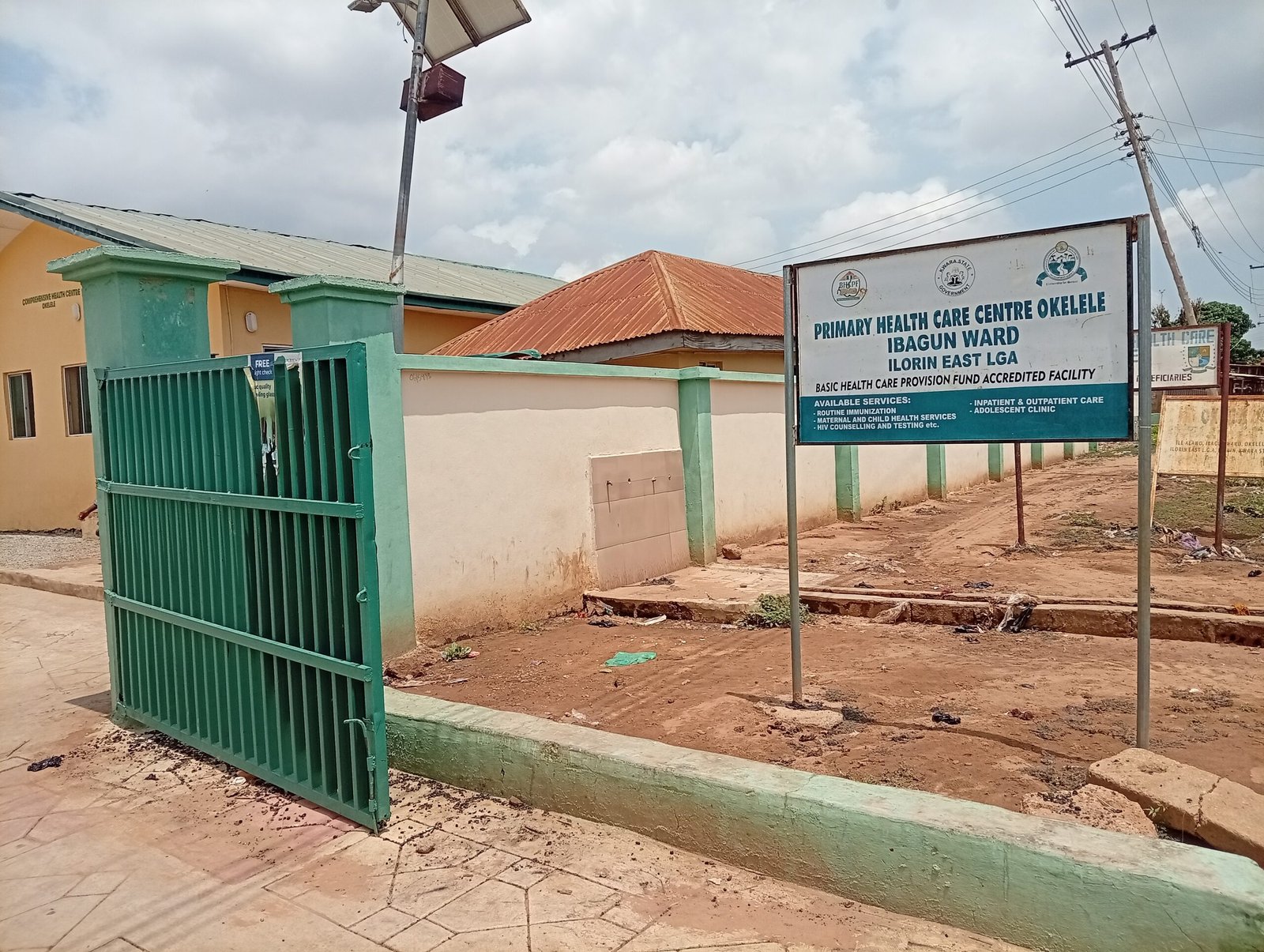
(Image: Okelele PHC, Ilorin)
A reminder that brought her back
On a humid Wednesday morning, pregnant women sat at the maternity section of Okelele Primary Healthcare Centre in Ilorin East Local Government Area of Kwara State listening attentively as the matron spoke on proper nutrition during pregnancy.
Among them was 18-year-old Tawakaltu Oseni.
A day earlier she had received a reminder call about her antenatal appointment through the mobile phone number linked to her National Identification Number (NIN) she provided when she registered for ante-natal care.
“I had forgotten until I received a call from the hospital,Oseni said. If they had not called me, I wouldn’t have come.”
Oseni’s case is not an isolated one. Many women at the clinic shared similar experiences of getting reminder calls and text messages.
“They usually call to remind us. That has been helping a lot,” another expectant mother said.
For health officials in Kwara State, these reminders are part of a broader strategy under the Federal Government-backed Maternal and Neonatal Mortality Reduction Innovation and Initiatives, MAMII and the state’s Rural Emergency Services and Maternal Transportation (RESMAT) programme.
Together, the programmes are using mobile phone-linked records, digital identity information and coordinated referral systems to ensure pregnant women remain connected to healthcare from pregnancy through childbirth.
At the centre of the reforms is Nigeria’s emerging Digital Public Infrastructure, a framework that combines digital identity systems, interoperable databases, connectivity infrastructure and data-sharing platforms to improve public service delivery.
Leveraging DPI, healthcare facilities, health workers are able to interact with pregnant women and nursing mothers.
Targeted health initiative improving maternal and child health
In November 2024, the Federal Government launched the Maternal Mortality Reduction Innovation and Initiative (MAMII), a health intervention aimed at significantly reducing maternal and neonatal mortality rates across Nigeria.
The programme, supported by the World Bank and UNICEF, targets 172 priority Local Government Areas (LGAs) in 33 states. According to official data, these LGAs account for about 55 per cent of maternal deaths recorded nationwide. In Kwara State, Moro and Ilorin East LGAs are among the selected beneficiaries.
By August 2025, MAMII had been domesticated in Kwara State following the training of 94 healthcare workers and enhanced capacity-building efforts across primary healthcare facilities.
Unlike many previous health interventions, MAMII focuses on addressing the three major delays associated with maternal mortality: delays in seeking medical care, delays in reaching healthcare facilities, and delays in receiving adequate treatment. To achieve this, the initiative deploys frontline health workers to improve health literacy, track pregnancies at the community level, connect pregnant women to health insurance schemes and emergency transportation services, and strengthen the capacity of primary and secondary healthcare facilities to provide safe delivery and emergency obstetric care.
The programme also promotes timely access to quality maternal healthcare services at Basic Emergency Obstetric and Newborn Care (BEmONC) and Comprehensive Emergency Obstetric and Newborn Care (CEmONC) facilities. Progress is monitored through performance scorecards, while technology, community engagement and incentive-based approaches are leveraged to improve outcomes.
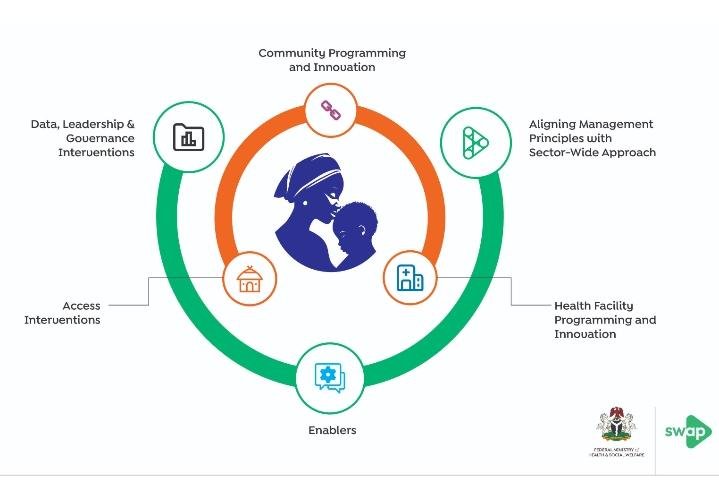
In Kwara State, pregnant women can access routine maternal healthcare services at primary healthcare centres closest to them. However, free Caesarean section services are currently available only at designated BEmONC and CEmONC facilities, including Kwara State University Teaching Hospital (KWASUTH), Ilorin; General Hospital, Offa; General Hospital, Kaiama; Aisha Buhari Mother and Child Hospital, Eyenkorin; and University of Ilorin Teaching Hospital (UITH), Oke Oyi.
Although MAMII does not operate through a dedicated mobile application, it leverages digital tools and identity systems, including mobile phone numbers, the National Identification Number (NIN), and electronic data-sharing platforms, to track pregnancies, facilitate referrals, and enable the secure sharing of medical records among healthcare providers.
Moving beyond paper records
For decades, healthcare in many public facilities relied heavily on paper files and handwritten appointment cards.
Once a woman missed an appointment, there was often no structured way to track her or reconnect her to care. Patient records were difficult to retrieve and referrals between facilities were not always seamless.
Under MAMII, pregnant women who register at participating health facilities are assigned unique identification numbers. Their biodata, contact information and medical history are documented, while phone numbers linked to their National Identification Number (NIN) help health workers maintain contact throughout pregnancy.
Pregnant women who do not have mobile numbers can provide the numbers of their spouses or relatives.
During each antenatal visit, health workers update attendance records and schedule the next appointment. Women who miss appointments are contacted through calls or text messages.
Health workers say the approach has improved continuity of care and reduced the number of women lost to follow-up.
Recent data by the Nigeria Demographic and Health Survey(NDHS) shows that Kwara State has achieved the lowest under-five mortality rate in Nigeria, recording 14 deaths per 1,000 live births, down from 74 per 1,000 in 2018. This milestone, confirmed by 2026 data, is attributed to strengthened primary healthcare, increased immunisation coverage, and 96.8% antenatal care attendance.
Keeping women connected through mobile network
According to the Kwara State Coordinator, Rural Emergency Services and Maternal Transportation (RESMAT), Dr Steven Arigidi, the health initiative is free and aims to ensure that pregnant women remain within the healthcare system until delivery.
“The beauty of a mobile phone now is that it is almost available everywhere and it doesn’t have to be a smart phone,” he said.
“So having them register using their mobile numbers is to track them, prevent a woman from defaulting and deploy help during emergencies.”
He explained that the programme allows women, newborn and members of their immediate family to enrol under the State Health Insurance Scheme.
“It is very important we follow up on them,” he said.
“The husband might not want to allow it but when the woman says the facility is even calling me. They will take it more seriously. And they might also be busy and forget their appointments.”
“We want to ensure that they keep the appointment and ultimately deliver in the health facility. Care is free, both medical and surgical, both for mothers and their babies, including transportation, just to ensure that we don’t lose either of them.”
Linking digital tracking with emergency transport
The phone-based system of MAMII is also integrated with RESMAT, which provides emergency transportation for pregnant women.
RESMAT uses decentralised emergency vehicles such as tricycle (Keke) ambulances and trained motorcycle riders who are connected by calls or SMS dispatch systems to bring pregnant women to health facilities in 30 minutes or less.
“When emergencies occur, healthcare workers can quickly contact transport operators and direct them to patients.
“Most women tend to deliver at night and they might find it difficult to go to the hospital. Delay could cause complications for both mother and child,” Arigidi said.
“The beautiful thing about the Rural Emergency Maternal Transportation is that, if any of these would-be-mothers call the health facilities they are using, they (the health facilities) then link them up to the transporter under RESMAT who moves them to the closest Basic Emergency Obstetric and Newborn Care, BEmONC, or a Comprehensive Emergency Obstetric and Newborn Care, CEmONC facility.”
“Referrals are made to the CEmONC when the BEmONC cannot attend to the pregnant women, particularly due to surgical interventions,” Arigidi explained.
Helping frontline workers track patients
At Okelele PHC, the matron and officer in charge, Motunrayo Yahaya, said the initiative has improved patient monitoring.
It has been of great assistance to our clients. There are no longer complaints about lack of financial capacity. The women who register here have access to free health services.
“When they come, we register them and assign a number,” she said.
It is compulsory to include her contact phone number or that of her husband. When we check our records and see that some people who were supposed to come did not, we also reach out to them. The NIN number is also taken. For backup, the phone number of the pregnant woman’s husband or her relative will be required.”
“The number assigned to them helps us for proper record keeping and documentation. Using the number and their phone numbers, we are able to ensure regular antenatal visits, delivery and after delivery,” Yahaya explained.
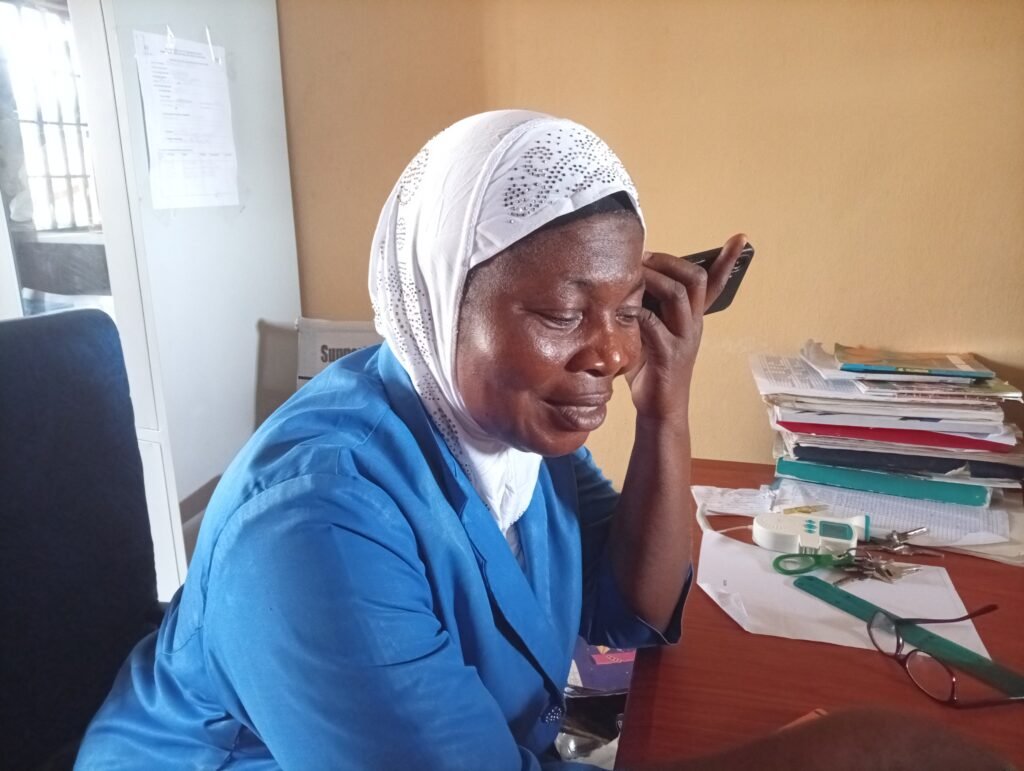
Everyday, the schedule officers check the record and send automated messages to women to remind them of their antenatal visits. Sometimes, direct calls are made.
A midwife at the facility, Sola Sanusi, said health workers also educate women on the importance of keeping appointments.
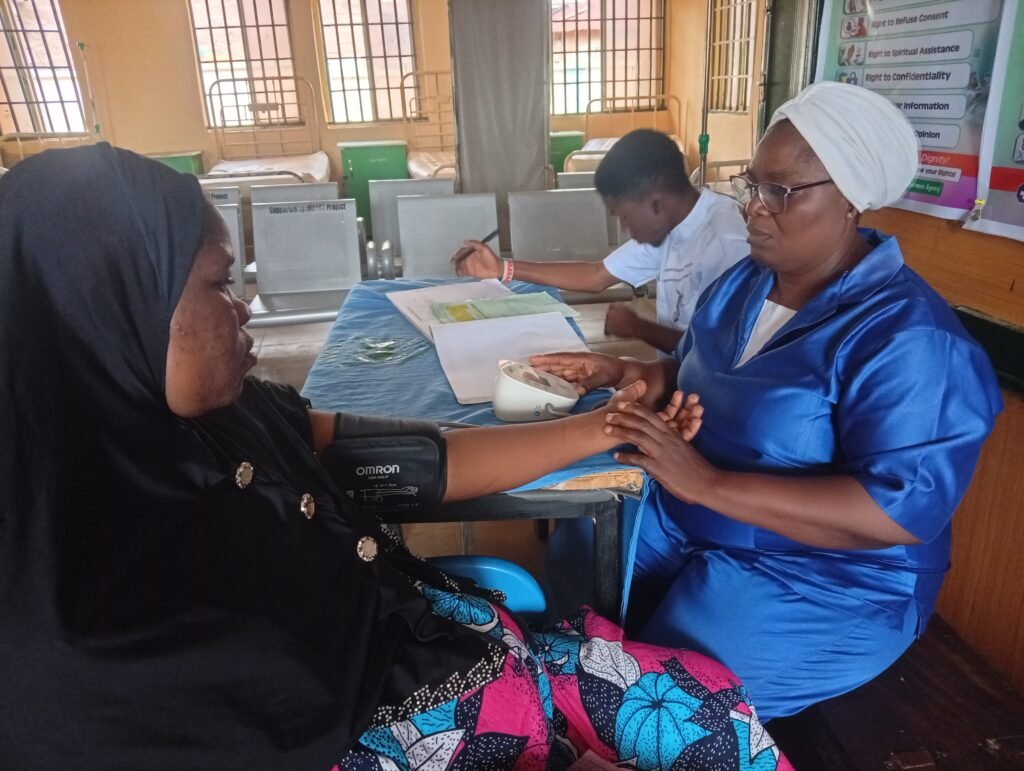
“When they come, we educate them on the benefits of antenatal care. The health talk helps motivate them to come regularly during their first, second and third trimester. We are able to track those who missed their appointments through their phone numbers. We also call other facilities for information.”
“The initiative helps women from antenatal care to delivery and after delivery. It helps women at the grassroots who do not have capabilities to pay. The health educators go to the communities to encourage women to go to hospital. And we refer them to secondary facilities when the need arises through data sharing.”
In Kwara North, Moro LGA, the Maternal and Child Healthcare Coordinator, Jumoke Okedare, affirmed that the numbers of women who turnout for antenatal care had increased following the tracking system.
Okedare also added that the free labour kits and medicines provided by the Government, are attracting new registrants from rural communities.
A lifeline during emergencies
For a beneficiary, Fatima Lukman, the system proved lifesaving.
“Their calls really helped,she said.
When I was in labour at night, I called them to notify them of my situation and they quickly connected me to a Keke rider who came to my home to take me to the healthcare facility.”
“They operated on me for free. I am grateful for this opportunity. My family could not have been able to pay for a surgery then,” Lukman said.
Another beneficiary, Rofiat Ibrahim, pointed out that phone registration enables health workers to monitor women throughout pregnancy.
“During registration, we are encouraged to write down a mobile phone number. That is how they are able to track us until delivery,” she said.
A key driver of the initiative is the collaboration with the National Union of Road Transport Workers (NURTW). This has been helping to facilitate easy movement of pregnant women in labour or those requiring emergency services to the health facilities.
A commercial tricycle operator, Saliu Sulaimon, has been part of the system. He said he transports pregnant women in need of emergency care.
“We usually communicate through phone numbers. The health facility calls directing me to where to pick the patient. Sometimes it is at a health facility or at the patient’s residence. Then, they will forward the patients registered phone number to me. Through that, I am able to navigate my way to where they are.”
Extending care to newborns
Beyond pregnancy, health workers say the system also supports child immunisation by helping facilities monitor vaccine schedules and follow up with mothers whose children miss appointments.
Officials believe the approach is improving maternal healthcare utilisation by reducing missed appointments and strengthening communication between patients and healthcare providers.

Bridging the remaining gaps
Despite the optimism surrounding the initiative, experts warn that digital healthcare systems can unintentionally deepen inequality if vulnerable populations are not considered.
Many women in rural communities still lack access to mobile phones, internet services or a foundational identity (NIN). With the growing adoption of DPI across sectors, there are concerns that women who do not possess NIN registration or access to digital devices may struggle to benefit fully from technology-driven healthcare systems.
Frontline healthcare workers play a crucial role in the implementation process of every health reform. This is why experts say health professionals including nurses, community health extension workers and immunization officers must be trained on using mobile devices and digital platforms to update patient information and monitor healthcare schedules.
This is being done by the Kwara State Government as training programmes have been introduced to help health workers understand electronic record systems, data entry procedures and digital reporting tools.
Although there are concerns that unreliable electricity supply and internet connectivity could stall operational efficiency. However, many say the benefits of faster record retrieval and easier patient verification cannot be undermined.
There are also concerns about data privacy, particularly with frequent reports of data leaks. Owing to the sensitive personal information in health records, critics say adequate safeguards are required to prevent misuse or unauthorized disclosure.
—————————————————————
This report is produced under the DPI Africa Journalism Fellowship Programme of the Media Foundation for West Africa and Co-Develop.


